Bathroom Ventilation Planning for Your Los Angeles Remodel

Updated: Sep 14
Steam from a hot shower can warp your wood cabinets and peel your paint within months. Many Los Angeles homeowners ignore airflow until they see black spots on the ceiling. Good planning for moisture control is a vital part of your bathroom design.
Bathroom ventilation planning ensures your remodel has enough power to remove moisture and keep indoor air fresh. Start by finding the right fan size based on your room square footage. Modern building codes require fans to move at least 50 cubic feet per minute to stop mold. Plan for a duct path that sends damp air straight outside rather than into your attic. According to the Building America Solution Center, run your fan for one hour after every shower. LevelWorks helps you pick quiet fans and smart switches. We handle permits so your new bathroom stays dry and healthy for years.
Why Is Bathroom Ventilation Important in an LA Remodel?
Bathroom ventilation in Los Angeles protects your home from moisture damage, mold growth, and structural decay. A properly sized exhaust fan removes humid air after every shower, preserves your new finishes, and maintains healthy indoor air quality for your family.
When you plan a bathroom remodel in Los Angeles, you likely think about new tile, sleek sinks, and bright lights. But one of the most vital parts of your project is hidden from view. Good bathroom ventilation planning keeps your new space clean and dry for a long time. In the Los Angeles area, good airflow is not just a rule. It is the best way to protect your home and your health.
Stopping mold and mildew
Wet air is the biggest threat to any bathroom. Steam from a hot shower fills the room and lands on every surface. If this damp air stays inside, proper bathroom ventilation prevents moisture buildup that can lead to mold, mildew, and bacteria growth. These growths can ruin your new walls and cause bad smells.
Mold is more than just a mess to clean. It can also pose health risks for your family. By moving wet air out of the house fast, you keep your bathroom fresh. This simple step keeps your walls dry and helps your paint and grout last much longer. Without a good fan, even a pricey remodel can start to look old and worn in just a few years.
Keeping humidity low
Many people think their bathroom is dry as soon as they step out of the shower. But the air often stays damp for a long time. To keep your home safe, it is best to run the fan for one hour after you finish bathing. This helps to pull the rest of the wet air out of the room. It also stops water from soaking into your wood cabinets and mirrors.
In a large city like Los Angeles, homes are often built close to each other. This can make it hard for fresh air to move in on its own. A well-planned fan system does the work that an open window cannot do. It provides a steady path for old air to leave and fresh air to come in. This type of active planning is a key part of any high-quality home project.
Protecting your home value
A bathroom remodel costs a lot of time and money. You want to make sure your work keeps its value for years. Extra moisture can warp wood, peel paint, and rust metal parts. By putting a strong exhaust fan in your plans, you stop these problems before they start. A dry bathroom is a strong bathroom that will not need constant work or repairs.
When you go to sell your home, buyers look for signs of water damage. A high-quality fan system shows that the remodel was done right. It gives new owners peace of mind knowing the home was well cared for. At LevelWorks, we help you pick the right tools to keep your Los Angeles home in top shape for the long run.
How to Size Your Bathroom Exhaust Fan for Effective Airflow
Proper fan sizing uses the square-foot rule for bathrooms under 100 square feet and fixture-based calculations for larger spaces. Minimum requirement is 50 CFM for intermittent fans, with higher ratings for rooms with jetted tubs.
Proper bathroom ventilation planning starts with choosing a fan that can move enough air. We measure this air flow in cubic feet per minute, or CFM. If your fan is too small, steam will stay in the room. This can lead to mold or germ growth. Getting the size right helps your home stay dry and safe after each shower.
The Square Foot Rule for Small Bathrooms
For most standard bathrooms, you can use a simple rule to find the right size. If your room has an 8-foot ceiling, you should aim for 1 CFM per square foot of floor area. For example, a 50-square-foot room needs a fan rated for at least 50 CFM. This simple math helps most people pick the right model for a typical layout.
Keep in mind that ceiling height changes how much air the fan must move. If your ceilings are higher than 8 feet, you may need a stronger unit to clear out steam. Our modern bathroom ventilation solutions focus on matching fan power to your room size to stop water damage.
Fixture Based Sizing for Large Spaces
If your bathroom is larger than 100 square feet, the square foot rule is not enough. In these large rooms, experts look at the individual fixtures to find the needed power. You should plan for 50 CFM for each toilet, shower, and tub. If you have a jetted tub, that one fixture needs 100 CFM on its own to handle the extra steam it makes.
Adding up fixture values gives a better estimate for a large suite or custom spa. A big room with a shower, toilet, and jetted tub needs a fan rated at 200 CFM. This approach ensures the fan pulls air from all areas where steam builds up.
Building Codes and Safety Rules
Modern building codes set clear minimums for safety and air quality. Current rules, such as ASHRAE 62.2, need at least 50 CFM for fans that you turn on and off. If you pick a fan that runs all the time, it must move at least 20 CFM. These rules ensure that even a small half-bath gets enough fresh air to stay healthy.
Working with an expert helps you meet these codes during a remodel. At LevelWorks, we handle all permit and compliance processes to make sure your new room follows local laws. We look at duct paths and room size to ensure your fan works well.
Duct Routing and Exhaust Placement for Bathroom Fans
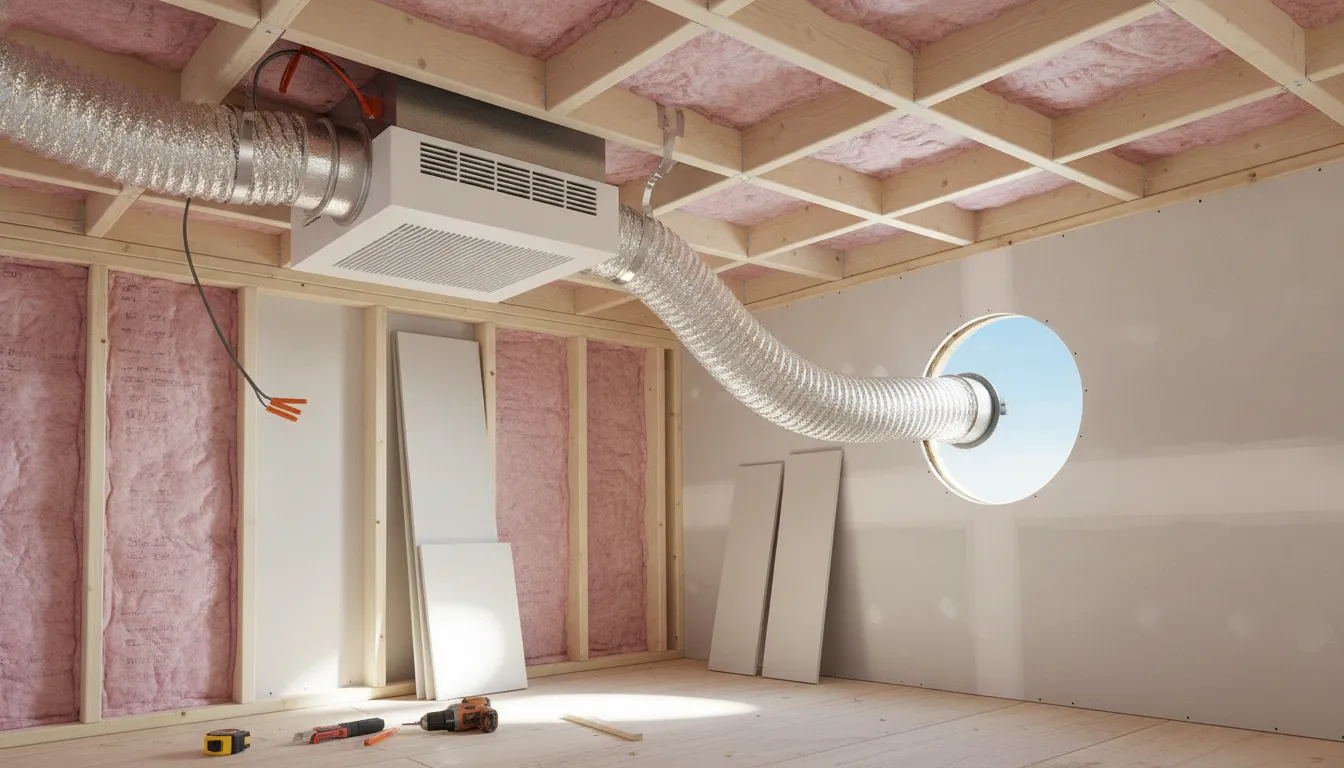
Effective duct routing uses rigid metal pipes with a short, straight path to an exterior roof or wall vent. Fans must never discharge into an attic or crawlspace.
Good bathroom ventilation planning needs a clear path for air to leave your home. It is a common mistake to vent a fan into an attic or a crawlspace. This trap keeps damp air inside the house walls. Over time, that moisture can lead to wood rot and mold growth. To stay safe, your fan must vent straight to the outdoors. This is a key part of bathroom exhaust fan rules that protect your home value.
Most Los Angeles homes use one of two main paths for exhaust. A roof vent is common for bathrooms on the top floor. This path is short and helps air move fast. For rooms on lower levels, a sidewall vent may be better. This setup exits through an outer wall. Both ways work well if the duct is short and has few turns. We help you choose the best spot based on your home layout.
Choosing duct materials and paths
The type of pipe you choose affects how well your fan works. Rigid metal ducts are the best choice for airflow. They have smooth walls that do not slow down the air. This keeps the fan quiet and helps it move more air. Flex ducts are easier to put in tight spots but can sag easily. If a duct sags, it can trap water or block air flow. You should aim for the straightest path to the outside. Each turn in the pipe adds drag and makes the fan louder.
In many bathroom ventilation planning steps, we look at the duct width too. Most fans need a four-inch or six-inch pipe. Using a pipe that is too small can choke the motor. This makes the unit work harder and fail sooner. A larger pipe moves air better and cuts down on noise. Our team makes sure that every pipe size matches the fan for the best results.
Professional routing for Los Angeles homes
Venting through a roof or wall needs careful sealing. If the exit point is not flashed right, rain can leak into your home and cause damage. Professional setup is key for local projects. We handle the permit process so your home meets all city rules.
Our project managers track every detail of the duct path. We check the vent hood has a back-draft flap to keep outside air and pests from coming in when the fan is off. By focusing on these details, we help you avoid costly moisture issues later.
Windows and Passive Ventilation: What Homeowners Should Know
Windows provide free airflow for powder rooms, but powered exhaust fans are essential for full bathrooms with showers and tubs. A dual system offers maximum moisture control for large master bathrooms.
Bathrooms need fresh air to stay dry and clean. Many people ask if a window is enough for bathroom ventilation planning. In the past, builders used windows as the main way to vent a room. Now, we use power fans to move air faster. Both ways have a place in a modern home. But you must know when one works better than the other. Choosing the right method helps protect your home value and comfort.
Natural vs. power methods
Natural air flow uses a window and costs nothing to run. But it depends on wind and weather outside. A power fan gives you full control and pulls wet air out through a vent pipe. This works even when it is cold or damp on the coast. Fans are best for high moisture areas like showers and tubs. Windows work well for guest baths where there is no steam.
Method | Best Use Case | Pros | Cons |
Natural (Window) | Powder rooms | No noise and free | Depends on weather |
Power (Fan) | Full bathrooms | Fast and reliable | Uses power |
Dual System | Large master baths | Max air flow | Higher cost |
Code requirements for moisture control
Building codes now set high bars for air flow. A simple window may not pass a check for a full bath fix. High moisture can lead to mold and bacteria growth in your walls. This can hurt your health and damage your house. Experts say you should run your fan for one hour after a shower to clear all the damp air. This keeps things fresh and dry. You can find bathroom ventilation solutions that fit your style while meeting these rules.
Planning for the Los Angeles climate
In Los Angeles, the air is often dry. But beach homes can face high humidity at night. Passive air flow through a window is not always enough. Local wind patterns in towns like Santa Monica change how air moves through your home. Our team helps you pick the right tools and handles permit work so your home meets all local laws. Good planning keeps your new bath safe from rot for years.
What Do California Building Codes Require for Bathroom Ventilation?
California follows ASHRAE 62.2 and IRC 2021 standards requiring fans to move at least 50 CFM and vent directly outdoors. Most LA and Orange County cities require permits for fan installations and duct modifications.
When you plan a bathroom remodel in California, you must follow strict state and local laws. Proper air flow is not just a good idea; it is a legal need. The California Building Code helps prevent mold growth and keeps your home air fresh.
ASHRAE 62.2 and Airflow Rules
California uses the ASHRAE 62.2 and IRC 2021 codes for home air flow. These rules say a fan must move 50 cubic feet per minute (CFM) for on-off use. If the fan runs all the time, it needs to move at least 20 CFM. These levels help pull out steam before it causes damage to your home.
To meet these codes, your fan must vent directly to the outside rather than an attic. You cannot vent a fan into a crawlspace, which is a common mistake in older homes. If moisture gets trapped in those dark spaces, it can lead to wood rot. Following the 50 CFM rule ensures your bathroom exhaust planning keeps your home in good shape.
Local Permits and Remodel Compliance
Most cities in Los Angeles and Orange County need a permit for bathroom work, including new fans. A permit shows that a city inspector will check the work to make sure it is safe. They ensure the fan meets the current code and the ductwork goes to the right place. Skipping this step can lead to big fines or problems when you try to sell your home.
Getting a permit can be a slow and hard task involving forms and long lines. But at LevelWorks, we take care of all permit and safety needs for our clients. We know the local rules in each city, so you do not have to worry about the paperwork. We make sure every part of your new bathroom meets the latest safety rules.
Why Expert Permit Help Matters
Expert permit help keeps your project on track and avoids costly stops from the city. If you do not have the right permits, the job can be delayed for months. When experts handle the paperwork, they catch small issues before they become big problems. This gives you peace of mind that your home is being built the right way.
Using a licensed team is the best way to handle these rules and install quiet fans. They have the skill to find a fan that meets the 50 CFM mark for your room size. This full service covers everything from design to the final check. It makes sure your bathroom is not just pretty, but also works well and follows the law.
Modern Fan Controls: Timers, Sensors, and Upgrades
Timer switches, humidity sensors, and smart home integrations automate your bathroom fan operation so moisture is removed without relying on manual switches. ENERGY STAR recommends sound ratings of 1 sone or less for quiet continuous operation.
When you start your bathroom ventilation planning, the right switch matters as much as the fan itself. Old-style toggle switches often lead to two problems. Either people forget to turn the fan on, or they leave it running all day. Modern controls solve these issues by making the process auto. These upgrades help keep your air clean without extra effort.
Timer Switches for Ease of Use
Timer switches are a simple but big upgrade for any home. These controls let you set the fan to run for a set time, such as 10, 20, or 60 minutes. Many models also have a delay-off feature. This keeps the fan going for a short time after you leave the room and turn off the light. This is helpful because you should often run the fan for about one hour after a shower to stop moisture buildup.
Using these bathroom ventilation solutions ensures you clear the air after every bath. A timer takes away the need to remember to go back and flip a switch later. It also helps save power by making sure the fan does not run for too long. These switches fit into standard wall boxes, which makes them an easy part of your planning.

Humidity and Motion Sensors
For more control, you can choose humidity sensors. These devices find spikes in moisture and turn the fan on by themselves. You can set the point where they start, so they only run when needed. This is great for bathroom ventilation planning in busy homes. The fan will shut off once the air is dry, which protects your walls from mold and dampness.
Motion sensors are another smart choice, mostly for guest baths. These turn the fan on when someone enters the room. Along with sensors, you must think about sound levels. ENERGY STAR recommends that fans have a sound rating of 1 sone or less for constant use. For fans that turn on and off, 3 sones or less is the goal. For context, 0.3 to 0.7 sones is like a whisper. A rating of 1 to 2 sones is quiet, while 3 or more sones can sound loud and annoying.
Smart Home Integration
The newest fans now work with smart home systems. You can connect your fan to WiFi and use an app on your phone. This lets you check if the fan is on or change settings from any place. Some fans also work with voice tools like Alexa or Google Home. You can tell the fan to start while you are still in the shower. These tools make it easy to manage your home air from one spot.
Smart fans often come with extra features like built-in lights or speakers. They can track air quality and send alerts to your phone if they find a problem. These high-tech units are a core part of modern bathroom builds. They offer the best mix of quiet work and ease of use for any Los Angeles remodel project.
Step-by-Step: Planning Your Bathroom Ventilation System
A successful bathroom ventilation plan includes measuring your space, calculating CFM needs, selecting the right fan, planning the duct route, and securing permits. LevelWorks manages every step from design through final inspection for your Los Angeles remodel.
Planning for air flow is a key part of any bathroom remodel. A good system keeps your home dry and safe. When you work with LevelWorks Construct & Renovate, we help you with each part of the job. Our team makes sure your new fan meets all local rules. Here are the steps to follow for bathroom ventilation planning during your project.
Measure your space
First, you need to find the size of your room. Measure the length and width of your bathroom floor in feet. If your room has a ceiling height of eight feet, you can use a simple rule. You will need one cubic foot per minute (CFM) for every square foot of floor space. For rooms larger than 100 square feet, you must look at each fixture. Large tubs or showers need more air flow to stay dry.
Pick the right fan
Once you know the size, pick a fan that can move enough air. Fans must have a capacity of at least 50 CFM for short use or 20 CFM for constant use to meet national building codes. You should also check the sound level, which is measured in sones. Quiet fans often have a rating of one sone or less. We suggest picking a model that is both strong and quiet for the best result.
Manage the project steps
Setting up a fan is more than just plugging it in. You must plan where the air will go. All fans must vent directly outside to prevent mold. LevelWorks provides dedicated project managers to oversee every step. We handle the design, the duct work, and all the small details. This ensures your system works well for years to come.
- Measure the room.
Find the floor area and ceiling height to know how much air your fan must move.
- Calculate your needs.
Use the square foot rule or count your fixtures to find the best CFM rating for your space.
- Select your fan.
Choose a model that meets code and has a low sound rating for a quiet bathroom.
- Plan the duct route.
Make sure the duct is short and leads straight to the outside of your home.
Handle the permits.
LevelWorks takes care of all
for your Los Angeles remodel.
Frequently Asked Questions
How long should a bathroom fan run after a shower?
You should leave your bathroom fan on for about one hour after you finish a shower. This helps clear out wet air that stays in the room and on walls. The Department of Energy says this length of time is best for keeping moisture levels low. Proper timing helps stop damp air from causing damage to your paint and drywall over time.
Can I vent my bathroom exhaust fan into the attic?
No, you must always vent your bathroom fan directly to the outside of your home. You should never let the air go into an attic or crawlspace. Dumping moist air into these dark spots can cause wood rot and mold growth in your roof. The Building America Solution Center says that fans must use a pipe that leads all the way to an outdoor wall or roof vent.
Do I need a permit for bathroom ventilation changes in Los Angeles?
Yes, most bathroom ventilation changes in Los Angeles need a permit, especially if you are adding new ducts or wiring. Local building codes have strict rules about how you vent air to the outside to prevent fire risks and moisture damage. A licensed contractor will help you get the right permits and ensure your home meets all safety standards. LevelWorks handles this process for you to make sure your remodel stays on track.
How much noise should a quiet bathroom fan make?
If you want a quiet home, look for a fan with a sound level of 1.0 sone or less. A sone is a unit that measures how loud a fan feels to your ears. The ENERGY STAR program suggests fans at or below this level for long runs. Fans rated up to 3.0 sones are still okay for short use, but lower levels will make your bathroom much more peaceful.
What is the minimum CFM for a bathroom exhaust fan in California?
California building codes require a minimum of 50 CFM for bathroom exhaust fans that operate on an on-off switch. For continuously running fans, the minimum drops to 20 CFM. These requirements come from ASHRAE 62.2 and the California Building Code. Your contractor can help you choose a fan that meets or exceeds these minimums for your specific room size.
Ready to schedule your bathroom ventilation consultation?
Ignoring proper airflow during your remodel can lead to costly mold growth and hidden structural damage. Starting your planning now ensures your project meets all LA building codes. You will get a healthy, dry bathroom that stays fresh for years. Our team handles every step from design to permits so you can focus on the results you want.
Ready to get started? Schedule a free consultation and design discussion for your bathroom remodel to set your project in motion.