Brick Pavers for Patios: Design Ideas and Installation Tips

Updated: 5 days ago
In Los Angeles and Orange County, a patio has to do more than look attractive. It needs to support everyday meals, weekend gatherings, and the long, sunny seasons that make outdoor living part of the home. The right layout, base preparation, drainage, and finish all matter as much as the paver itself.
Brick pavers for patios can create a durable, welcoming surface with design flexibility for traditional, modern, and indoor-outdoor spaces. A successful project starts with choosing the right material and pattern, then depends on careful grading, a stable base, precise installation, and sealing suited to the site.
LevelWorks Inc. provides full-service hardscape installation, from patio design and 3D visualization through construction, grading, and sealing. That end-to-end approach helps homeowners make confident choices before work begins and build a patio that feels integrated with the rest of the backyard. First, consider why pavers are such a strong fit for Southern California homes.
Get a free quote for your brick paver patio with LevelWorks or call (855) 202-2015 to start your Los Angeles or Orange County project.
Why Choose Brick Pavers for Your Southern California Patio?
Southern California patios do more than connect the back door to the yard. They create space for morning coffee, family dinners, weekend gatherings, and relaxed evenings outdoors. Brick pavers are a strong fit for that lifestyle because they combine a distinctive surface with practical flexibility. With the right base, grading, and material selection, they can become a durable extension of the home rather than a short-term cosmetic update.
One of the first decisions is whether clay or concrete pavers better suit the property. Clay pavers are fired from natural earth, giving them timeless color variation and a classic, weathered texture. That character can complement older Los Angeles homes, Spanish-inspired architecture, and cottage-style landscaping. Concrete pavers are manufactured for uniformity and strength, making them useful when the design calls for clean lines, consistent dimensions, or a more contemporary surface. Neither option is automatically right for every patio. The best choice depends on the home's architecture, the intended traffic level, the surrounding materials, and the look you want to maintain over time.
That design flexibility is especially valuable in a region where outdoor rooms are used throughout much of the year. A well-installed patio can significantly expand usable living space and make it easier to integrate seating, planting beds, a fire pit, or an outdoor kitchen. A traditional brick tone can warm up a simple backyard, while a restrained color palette and precise layout can support a modern renovation. The pavers should work with the home's facade, exterior flooring, walls, and landscape instead of looking like an isolated surface.
Climate-appropriate materials and professional installation matter just as much as appearance. Southern California's mild conditions make patios a worthwhile investment, but seasonal rain still makes drainage and grading important. A quality installation should direct water away from the foundation and account for how the patio meets existing walkways, doors, garden areas, and other hardscape. The materials should also be selected for outdoor exposure and the way the space will be used.
For homeowners comparing brick pavers for patios, the deciding factor is often the complete system, not the individual unit. A carefully planned design, stable foundation, accurate layout, and attentive finishing work give the patio its lasting performance. LevelWorks uses a design-build approach that coordinates the project from planning through construction, with quality materials suited to the Southern California climate. That quality-first process helps ensure the finished patio feels natural to the home and remains ready for everyday outdoor living.
What Are the Best Brick Paver Patterns and Design Ideas?
The pattern you choose does more than determine how a patio looks. It influences the visual scale of the space, how the eye moves across it, and how well the surface complements your home's architecture. In Southern California, the right layout can also make an outdoor room feel intentional. Whether you are creating a quiet seating area or a patio designed for year-round entertaining.
Running bond: simple, clean, and adaptable
Running bond is one of the simplest brick paver arrangements. Each row is offset from the one beside it, creating a familiar, structured appearance. Its straightforward lines work especially well on smaller patios because they can make the surface feel longer or wider, depending on the direction of installation. The pattern is also easy to coordinate with rectangular furniture, a linear outdoor kitchen, or the clean geometry of a modern home.
For a more tailored result, use a contrasting border around the running bond field. A darker edge can define the patio from adjacent planting beds, while a subtly different clay or concrete paver can add depth without making the design busy. The pattern is flexible enough for contemporary spaces, but it can also suit a traditional home when paired with warm, earth-toned materials.
Herringbone: movement with a stronger interlock
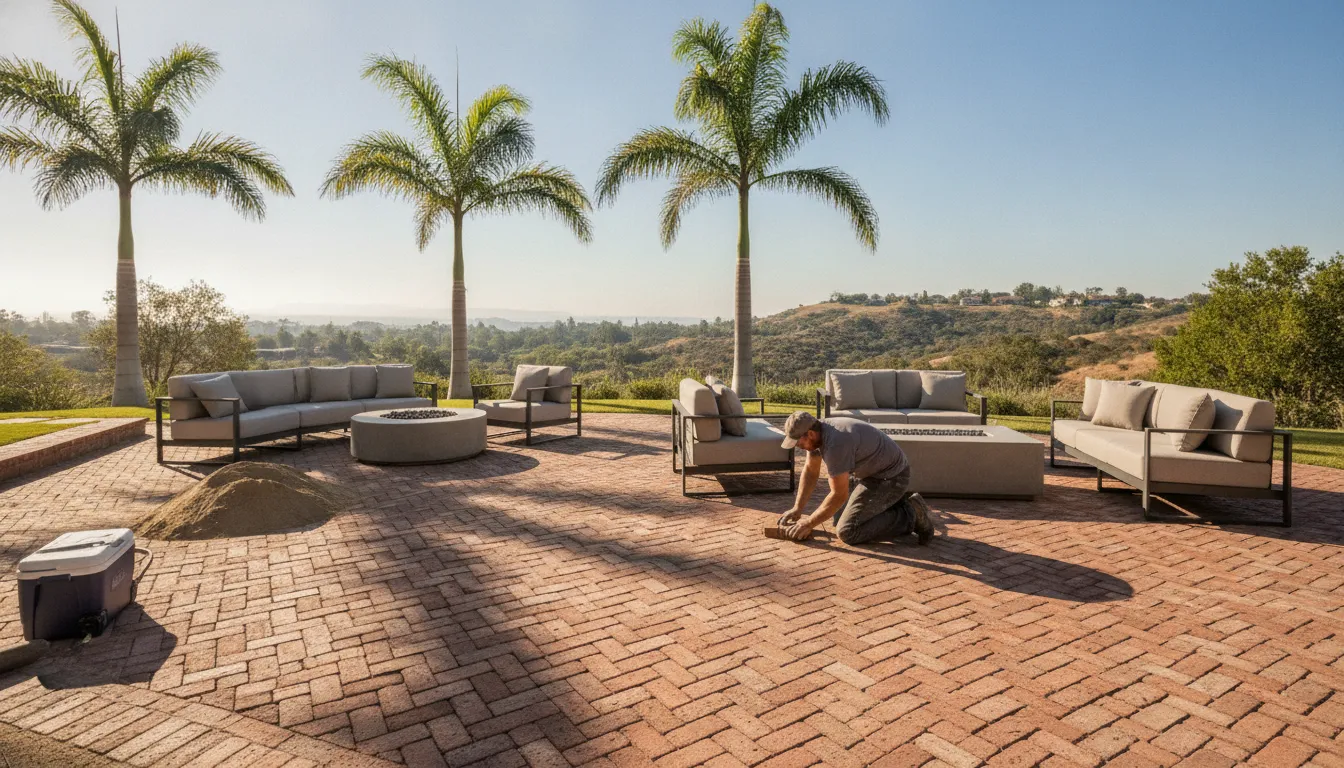
Herringbone places pavers at alternating angles to create a zigzag effect. The 45-degree and 90-degree versions both bring more movement than running bond, making them useful when the patio needs to serve as a visual focal point. Because the units interlock across the field, herringbone can also help minimize movement when the base and edge restraints are installed correctly.
This pattern is a strong choice for a large entertaining area, a central walkway, or a patio that transitions between several outdoor zones. A border is particularly helpful with herringbone because it gives the angled field a crisp stopping point. Before installation, the layout should be planned around steps, doors, drains, and the intended furniture arrangement so the pattern does not end awkwardly at a high-visibility edge.
Basketweave: architectural detail with a classic feel
Basketweave alternates the orientation of paired pavers, creating small woven blocks across the surface. It adds character without relying on multiple colors or elaborate shapes. The pattern is a natural fit for cottage-style landscapes, older homes, and patios where you want a more established, handcrafted appearance. It can also soften a newer renovation when the rest of the yard uses natural stone, textured walls, or layered planting.
Match the pattern to the way you live
Pattern is only one part of the design. A modern patio may pair restrained colors, a narrow border, and simple running bond lines with an outdoor kitchen. A cottage-inspired space may use weathered clay tones, basketweave, and irregular planting along the edges. Fire pits, built-in seating, and cooking areas should be positioned during the design stage, not added after the pavers are selected. LevelWorks specializes in integrating outdoor kitchens and fire pits into Southern California backyard transformations, and this custom paver patio design guide offers a closer look at that approach.
Use the pattern to establish the foundation, then coordinate color, borders, lighting, planting, and furniture around it. A thoughtful plan lets brick pavers for patios support both the architecture of the home and the everyday rhythm of outdoor living.
What Does It Cost to Install Brick Pavers for Patios in LA and Orange County?
For most LA and Orange County homeowners, the right budget starts with the patio's size, access, existing grade, material, and the amount of base preparation required. A typical brick paver patio installation ranges from about $10 to $50 or more per square foot, depending on materials and labor complexity. That is a broad planning range rather than a fixed bid. A compact, level backyard with easy access may land toward the lower end, while a sloped site. Demolition, difficult access, drainage work, borders, steps, or integrated outdoor features can move the project higher.
The surface material is only one part of the investment. A durable patio needs a properly prepared foundation, accurate layout, and grading that directs water away from the home. In Southern California, thoughtful planning also helps the new space function as an extension of the home for dining, entertaining, and everyday outdoor living.
Clay vs. Concrete Pavers: How the Material Affects Value
Consideration | Clay pavers | Concrete pavers |
Cost planning | Can carry a higher material cost when homeowners choose kiln-fired brick, specialty colors, or a detailed layout. | Often offers a wider range of shapes, sizes, and price points, making it easier to match a specific budget. |
Durability and look | Fired from natural earth, with timeless colors and a classic, weathered texture that suits traditional homes. | Manufactured for uniformity and strength, with a consistent surface that works well in high-traffic patio areas. |
Maintenance | Generally low, but routine sweeping, cleaning, and occasional sealing can help protect the finish. | Generally low as well, with periodic cleaning, joint attention, and sealing helping manage staining and weed growth. |
There is no universal winner between the two. Clay may be the better fit when the goal is warm variation and a time-tested brick character. Concrete can be a practical choice when consistency, strength, and design flexibility matter most. The best selection should account for the home's architecture, the intended traffic, sun exposure, drainage, and the surrounding hardscape. LevelWorks uses quality materials suited to the Southern California climate so the finished patio balances appearance with long-term performance.
What Should Be Included in the Estimate?
Ask for an estimate that clearly identifies demolition, excavation, base materials, edge restraints, pavers, joint sand, grading, drainage, sealing, labor, and any steps or walls. Comparing only the per-square-foot number can hide important differences in scope. A low initial quote may not include the site work needed to prevent movement, settling, or water collecting near the foundation.
LevelWorks offers free, no-obligation estimates that remain valid for six months. Major projects also include free 3D design visualization, giving homeowners a clearer way to review the layout before construction begins. This is especially useful when the patio connects to an outdoor kitchen, fire pit, walkway, or pool area. View the company's project and service approach, then request a site-specific recommendation rather than relying on a generic calculator.
Although a paver patio is a meaningful upfront expense, it can be a long-term investment when the design, materials, and installation are handled well. It adds usable outdoor living space and can improve home value. But the strongest return is a patio that fits the property and remains comfortable, functional, and attractive for years.
What Goes Into a Professional Paver Patio Installation?
A durable patio is built from the ground up. The visible brick pavers receive most of the attention, but the excavation, base, slope, and drainage determine whether the finished surface stays level and comfortable to use. A professional installation follows a deliberate sequence so each layer supports the next.
Plan the layout, elevations, and approvals
The process starts with the patio footprint, access points, furniture zones, steps, planting areas, and any future features such as an outdoor kitchen or fire pit. The installer also considers how the patio meets the home, walkways, and yard. Depending on the project's scope and location, permits or site inspections may be required. A qualified contractor can coordinate with the appropriate Los Angeles or Orange County building department instead of leaving the homeowner to guess which approvals apply. LevelWorks uses a design-build approach that can carry a project from design and permits through construction.
Excavate deeply enough for the full foundation
After the layout is marked, the installation area is excavated approximately 6 to 12 inches. That depth makes room for a compacted crushed-stone foundation, a bedding layer of sand, and the pavers themselves. The exact depth depends on site conditions, soil, drainage needs, and the intended use of the patio. Skimping on excavation can leave too little room for a stable base, which increases the risk of shifting, sinking, or an uneven surface later.
Grade the site and solve drainage before paving
Water should move away from the home's foundation rather than collect against it or settle in low spots. The crew establishes the planned grade during preparation, then accounts for runoff, downspouts, nearby hardscape, and seasonal storms. Drainage work may include shaping the subgrade or adding a dedicated drainage solution where needed. Getting this stage right protects the patio and helps prevent pooling, erosion, and water-related damage.
Build and compact the crushed-stone base
The base is the most important part of the system. Crushed stone is installed in controlled layers and compacted thoroughly to create a firm, consistent platform. This is where many DIY projects become difficult: a surface can look level before the pavers are installed while still containing soft areas that will settle under foot traffic and patio furniture. Careful compaction and repeated checks help the finished patio remain stable.
Set the sand, lay the pattern, and lock the joints
A uniform bedding layer is placed over the prepared base. The pavers are then installed to the selected pattern, with attention to straight lines, borders, transitions, and cuts at the edges. Running bond, herringbone, and basketweave are common options, but the pattern should suit the home's architecture and the patio's shape. Once the field is complete, joint sand is swept into the spaces between pavers and compacted so the units interlock. Edge restraints help keep the perimeter from spreading.
Finish, inspect, and seal the surface
The final stage includes checking elevations, confirming drainage, removing construction residue, and sealing when the material and project plan call for it. Sealing can help protect against stains, color fading, and weed infiltration. Homeowners who have the time and ability to manage excavation, base preparation, and pattern planning may find paver installation manageable as a DIY project. For larger patios, complex grades, permit requirements, or integrated outdoor features, professional paver installation services provide a more reliable path from preparation to completion.
How Do You Maintain a Brick Paver Patio the Right Way?
Brick pavers for patios are relatively low maintenance, which is one reason they work so well for Southern California outdoor living spaces. A simple routine helps preserve the color, keep joints clear, and catch small issues before they become larger repairs.
Start with regular sweeping and gentle cleaning
Sweep the patio periodically with a stiff outdoor broom to remove leaves, sand, food debris, and other material that can settle between the pavers. Organic debris can decay and leave stains, while accumulated dirt creates a better environment for surface weeds. Pay particular attention to shaded corners, areas beneath outdoor dining furniture, and the edges beside planters.
When the surface needs more than sweeping, clean it with water and a suitable paver-safe solution. Work in manageable sections and rinse thoroughly so residue does not remain in the joints. Avoid aggressive pressure washing unless you know the correct setting and technique. Excessive pressure can displace joint material or drive water into areas where it may contribute to erosion.
Inspect the joints, edges, and drainage
Include a quick visual inspection whenever you clean. Look for pavers that have shifted, settled, or become uneven, along with cracked units, loose edge restraints, and joints where weeds are starting to grow. Early attention is especially useful after heavy seasonal rain, when runoff can expose drainage or grading problems.
Keep nearby drains, channels, and low points free of leaves and dirt. Water should move away from the home rather than collect against the foundation or sit on the patio. Regular inspection and maintenance help a paver system remain functional, attractive, and less costly to maintain over time.
Use sealing strategically
Sealing is not a substitute for cleaning, but it can add another layer of protection. A properly selected sealer may help reduce staining, color fading, and weed infiltration. Discuss the finish before application, since a glossy product can change the appearance and may not be the right choice for every design. Follow the product guidance for surface preparation, drying conditions, and reapplication rather than sealing over dirt or moisture.
For a pool deck, maintenance also supports safety. Brick pavers can provide a durable, slip-resistant surface that resists staining and cracking when properly maintained. Keep the area free of algae, soap residue, and standing water, and choose cleaning and sealing products appropriate for wet-foot traffic. With routine sweeping, occasional cleaning, inspections, weed prevention, and thoughtful sealing, your patio can remain comfortable and inviting through year-round SoCal use.
Who Should Install Brick Pavers for Patios in Los Angeles and Orange County?
Brick pavers for patios can be a manageable DIY project for a homeowner with the time and experience to excavate. Prepare a stable base, plan the pattern, and finish the edges correctly. The work becomes more demanding when the patio connects to the house, sits near a slope, needs coordinated drainage, or forms part of a larger backyard renovation. In those situations. An experienced Los Angeles or Orange County contractor can protect the project from problems that are difficult and expensive to correct after the pavers are installed.
The base is the foundation of the entire surface. A professional crew evaluates the soil, excavates roughly 6 to 12 inches where needed. Installs the crushed stone foundation and sand layer, and compacts each layer for a firm, even result. If the base is too shallow or poorly prepared, pavers can shift, sink, or develop uneven areas over time. That preparation is not visible in the finished patio, but it has more impact on performance than the pattern alone.
Drainage and permits deserve careful planning
Southern California patios still need to manage seasonal runoff. Proper grading directs water away from the home's foundation, while purpose-built drainage can help prevent pooling and water-related damage. A contractor can account for existing downspouts, walls, walkways, and transitions so water does not simply move from the new patio into another problem area.
Permitting requirements depend on the scope and location of the work. A design-build contractor can help identify when permits or local building-department coordination are needed, then carry that process through the construction schedule. This is especially useful when a patio is part of a broader project that includes walls, structures, utilities, or significant grading.
One team can connect design, materials, and construction
A full-service team brings the design and installation decisions together. LevelWorks can plan a patio as part of a larger outdoor living space, including outdoor kitchens, fire pits, pergolas, and drainage improvements. Homeowners can review the layout before construction, with free 3D design visualization included for major projects. The result is a more cohesive plan instead of a patio that looks disconnected from the home's architecture or the rest of the yard.
Professional input also helps match materials to the setting. Clay pavers offer natural, timeless color and texture, while concrete pavers provide manufactured uniformity and strength. Using quality materials suited to the Southern California climate supports both long-term durability and the visual character you want. Whether that is clean and modern or warm and traditional.
For more selection guidance, review these tips on hiring a paver patio construction company. If the patio is one part of a larger outdoor transformation, a backyard renovation contractor can coordinate the complete scope. A well-designed, professionally built patio is a long-term investment that can expand usable outdoor living space and contribute to the home's overall value.
Schedule your patio consultation with LevelWorks or call (855) 202-2015 to discuss your Los Angeles or Orange County project.
Frequently Asked Questions
What is the difference between clay and concrete brick pavers?
Clay pavers are fired from natural earth, giving patios classic color variation and a traditional character. Concrete pavers are manufactured for more uniform sizing, colors, and finishes. The right choice depends on whether you prefer a timeworn look or a more consistent modern design, along with the performance and budget goals for your project.
Can I install brick pavers for a patio myself?
Yes, a capable homeowner can manage a smaller project with careful planning. The work still requires accurate layout, thorough excavation, a stable compacted base, proper grading, and precise placement. Larger patios, complex patterns, drainage concerns, and connections to existing features are usually better handled by an experienced installation team.
Which patterns are popular for brick paver patios?
Running bond creates clean lines and can make a patio feel longer. Herringbone adds movement and visual interest, while basketweave brings a more traditional cottage feel. Your installer can also combine borders, contrasting colors, and pattern changes to define dining, lounging, or outdoor kitchen areas without making the layout feel busy.
How do I maintain my brick paver patio?
Maintenance is generally straightforward. Sweep regularly, clean spills before they set, and watch for weeds or shifting joints. Periodic washing and resealing can help preserve the surface, depending on the paver material and finish. Addressing drainage or loose pavers early helps protect the patio and keeps it ready for everyday outdoor living.
Ready to Plan Your Brick Paver Patio?
A thoughtful patio design and carefully prepared base can create a comfortable outdoor space that fits how your LA or Orange County household lives. LevelWorks can help you review your ideas, materials, and installation needs before the project begins. To get started, request a free, no-obligation estimate for your brick paver patio, or call LevelWorks at (855) 202-2015.