How to Vet Driveway Paver Installers in LA

Updated: 7 days ago
Many beautifully paved driveways begin to sink or buckle after just one heavy Southern California rainstorm. This happens when homeowners hire contractors who prioritize surface looks over deep sub-base prep and proper drainage planning.
Skilled driveway paver installers prevent sinking, shifting, and costly structural damage by completing robust technical preparation and careful soil engineering before laying a single stone. To choose the best local team, check that they are licensed California general contractors who manage the entire design-build process from 3D designs to permits. Their professional on-site installation process must include deep sub-grade excavation, heavy-duty geotextile fabric to stabilize clay soil, and graded drainage paths to control runoff. Finally, make sure they use top-grade materials from trusted local brands for maximum durability. They must also back their craftsmanship with a solid warranty that protects your beautiful and durable home driveway for many decades to come.
Before hiring any company, you must know how to identify true quality and avoid common contractor mistakes. To guide your decision, we cover everything from structural preparation to the final layout. The path begins with: How Do You Vet Driveway Paver Installers Before You Hire One?
How Do You Vet Driveway Paver Installers Before You Hire One?
To vet driveway paver installers, you must check their California contractor license, bond status, and active insurance. Ask to see pictures of past paver driveways rather than general remodels. Look for a team that manages the design, permits, and construction with a dedicated project manager.
Check Licensing, Bonds, and Insurance
Every paving contractor in California must hold an active license with the Contractors State License Board. You should ask for their license number and check it online. A valid license shows they follow state laws and safety rules. You should work with local paving installation experts who are licensed, bonded, and insured.
You also need to make sure they carry both general liability insurance and workers' compensation. This insurance protects your home and the workers if an accident happens on your property. If a worker gets hurt and the company does not have proper insurance, you could be held liable for the medical bills. Never hire a company that cannot prove they are bonded and insured.
Look at Past Projects and Reviews
Do not just look at basic home remodels when you review a company's past work. You want to see pictures of actual paver driveways they have built. Their past photos show their skill with joint lines, patterns, and edge restraints. Asking for names of past clients in your area is also a smart way to check their skills.
You can also check their track record by reading reviews on Google and talking to past clients. A good team builds trust through positive client feedback and a long history in the industry. Paving must focus on long-term structural strength rather than just how it looks when first done. A quality paving job must stand up to heavy car traffic and changing weather over many years.
Confirm Full Design-Build Support
The best paving contractors use a design-build model to handle your project from start to finish. This means the same company manages the 3D design, city permits, and final construction. You do not have to deal with different teams or worry about mistakes. This keeps the whole driveway remodel simple and easy.
This full-service method gives you a single project manager who leads the work and keeps you updated. They will watch over every step from the first layout plan to the final paver joint sanding. With one team managing the process, your driveway build is smooth, on track, and built to last.
Why Does Base Preparation Matter for a Paver Driveway?
Proper excavation depth and load limits
Many homeowners look only at the colors and shapes of driveway pavers, but the real strength is under the ground. Good driveway paver installers know that a long-lasting driveway starts with proper digging. Digging to the right depth is a key first step that prevents sinking. If you skip this step, the pavers will shift.
This depth is not the same for every home. How deep you must dig depends on your soil and the weight of your cars. Heavy trucks and SUVs need a thick base, while standard drives need about eight to twelve inches of stone. If they do not dig deep enough, the heavy loads will soon warp the stone.
Stabilizing clay soil with geotextile fabric
In Southern California, local paving crews often run into tough clay soil that holds water. This clay grows when wet and shrinks when dry, which can cause top pavers to sink. While frost heave is rare in our warm climate, clay settling remains a constant threat. To stop this, local paving installation experts must build a deeper base.
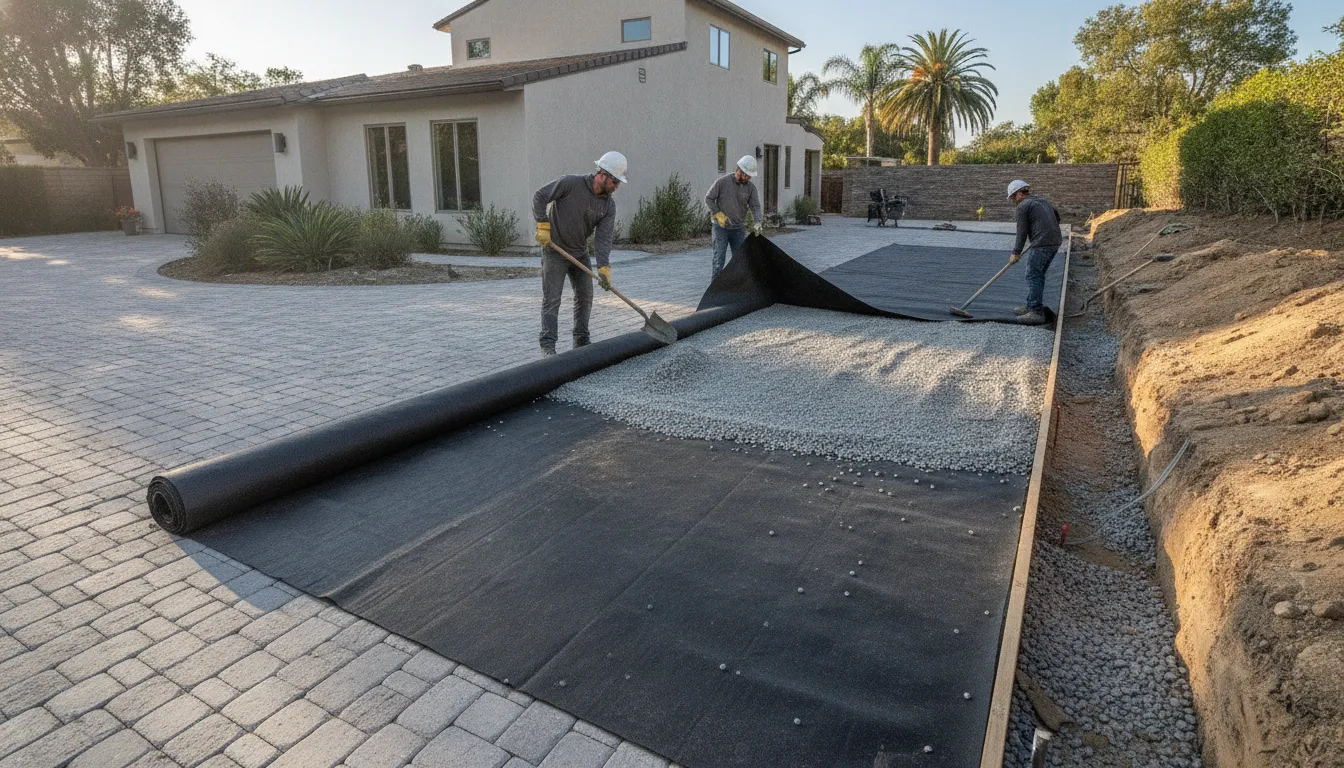
To keep this clay soil from shifting, installers lay down a strong geotextile filter fabric directly over the dirt. This fabric acts as a filter that separates the soft clay soil from the gravel base. Without this barrier, the heavy gravel base would mix with the clay and sink over time. Using fabric ensures the entire driveway base stays stable and resists sinking under heavy cars.
Compacting aggregate base layers for long-term strength
On top of the fabric, the crew adds layers of crushed stone and aggregate to form the base. This stone base is the most critical part of the entire build. You must focus on long-term structural integrity rather than how the surface looks on day one. A weak base causes quick failure, and it takes only one wet season to show if your driveway was built right.
To build a strong base, the crew must add stone in thin layers and pack each layer with heavy machines. This process locks the stones into a solid mat that can hold heavy trucks for many years. A good crew packs the stone in three-inch steps to make sure the entire base is tight. Homeowners should always ask: does the crew dig deep enough and compact each lift?
How Should a Paver Driveway Handle Water and Drainage?
Choosing a new driveway is about more than just looks. A major key to a sturdy surface is how well it handles heavy rain and surface runoff. Unlike solid concrete or asphalt that can crack and hold water, a well-built paver system handles water from the ground up. Before you start, make sure your chosen driveway paver installers plan for water flow from day one.
How do pavers direct water?
A good paver driveway does not let water pool on top. Instead, water channels down through the small joints between each stone. This water then flows into a proper base and drainage layer below. This clever design keeps your driveway dry and stops mud from building up on your yard.
This setup works as part of your green design. It captures and filters stormwater. This restores the natural water cycle and cuts down on runoff. Unlike pavers, solid concrete blocks water, which leads to heavy runoff and washes away your soil. A clean paver design solves this issue for good.
What are pervious paver options?
In some cases, standard paver joints are not enough to manage water in flat spots. Pervious pavers and grid pavers are a great choice for walkways, paths, and lower-traffic zones. These blocks let water pass right through the surface of the stones rather than just between them. This helps prevent large puddles and keeps the ground stable.
These systems work well on driveways with light traffic. They are also useful on pathways where you need extra runoff control. Using these options for your paver and concrete work is a smart way to manage water and protect your land.
Why does pre-construction grading matter?
Before a team places any pavers, they must first prep the dirt. A sloped or pitched surface is needed to make sure water flows away from your home. If the slope is wrong, water can collect near your foundation and cause major damage. A good builder will grade the ground and set up edge drainage to lead water away safely.
Does your project plan show how they handle grading, base drainage, and runoff before they lay a single paver? If not, you may face sinking stones and wet soil in the future. Working with an expert team ensures that these issues are solved before the first stone is laid. This keeps your driveway flat and strong for many years.
Driveway Paver Installer Checklist: Qualities vs. Red Flags
Choosing the right team for your project is key to a strong driveway. Many firms can lay down stone, but only skilled crews know how to prepare the ground below. An expert team cares about base strength rather than just quick looks. To find the best help, you should know what to seek and what to avoid when talking to local teams.
What to Look For
When you interview professional driveway paver installers, always ask about their license and bond status. A real contractor holds a current state license and carries full liability coverage. This protects you and your home if a mishap occurs during the build. You also want to see clear photos of their past paving jobs in the local area. Asking to see real-world project results is a great way to check their skills.
A good team will also inspect your yard to check the soil type before they start. Areas with heavy clay soil need a deep, stable gravel base to prevent shifting over time. Expert crews will map out the correct excavation depth and drainage plan. Using a strong geotextile fabric between the soil and base layers also helps keep long-term strength. This key step is what keeps your new driveway flat and neat through many rainy seasons.
Quality to Look For | Red Flag to Avoid |
Licensed, bonded, and insured contractor with a current CA license. | Unlicensed day labor or crew with no safety coverage. |
Years of experience with paving projects and a strong portfolio. | A generic remodeler with no past driveway paving work. |
Inspects the soil and plans out proper excavation and drainage. | Lays down stone on top of whatever dirt is there. |
Detailed written estimate showing base prep and material costs. | A vague verbal quote with no real breakdown of the work. |
A dedicated project manager with a clear project warranty. | No single point of contact or lack of solid project support. |
Common Warning Signs
You can spot a bad contractor by how they handle the first estimate. If they offer a quick verbal quote with no written breakdown, you should walk away. A safe company gives you a clear contract. This paper should list the excavation depth, stone types, and the project timeline. Knowing these details upfront keeps you safe from hidden fees later on.
Finally, make sure you have a single point of contact. Having a dedicated project manager ensures clear talk and fast answers. They will guide the crew and keep the work on track. Working with local paving installation experts who run the build from start to finish will save you time and stress.
How Can You Spot Quality Paver Craftsmanship on Site?
A new driveway should look great on day one. But true success is about how it holds up over time. Many driveways look good when first put in, but a wet winter can cause cheap work to sink or shift. When you hire professional driveway paver installers, they focus on long-term strength. Modern design matters, but a durable installation is what actually lasts for years.
Consistent materials
High quality work starts with the right blocks. Skilled teams use strong materials from known makers like Belgard or Angelus to ensure a consistent look and feel. These brands make stones that can bear heavy loads without cracking. Before the crew starts laying the stones, ask which brand they use. If you want to know about your options, you can read our guide on paver bricks vs concrete pavers. Strong blocks from top brands mean your driveway stays flat and safe.
Even joint spacing and clean cuts
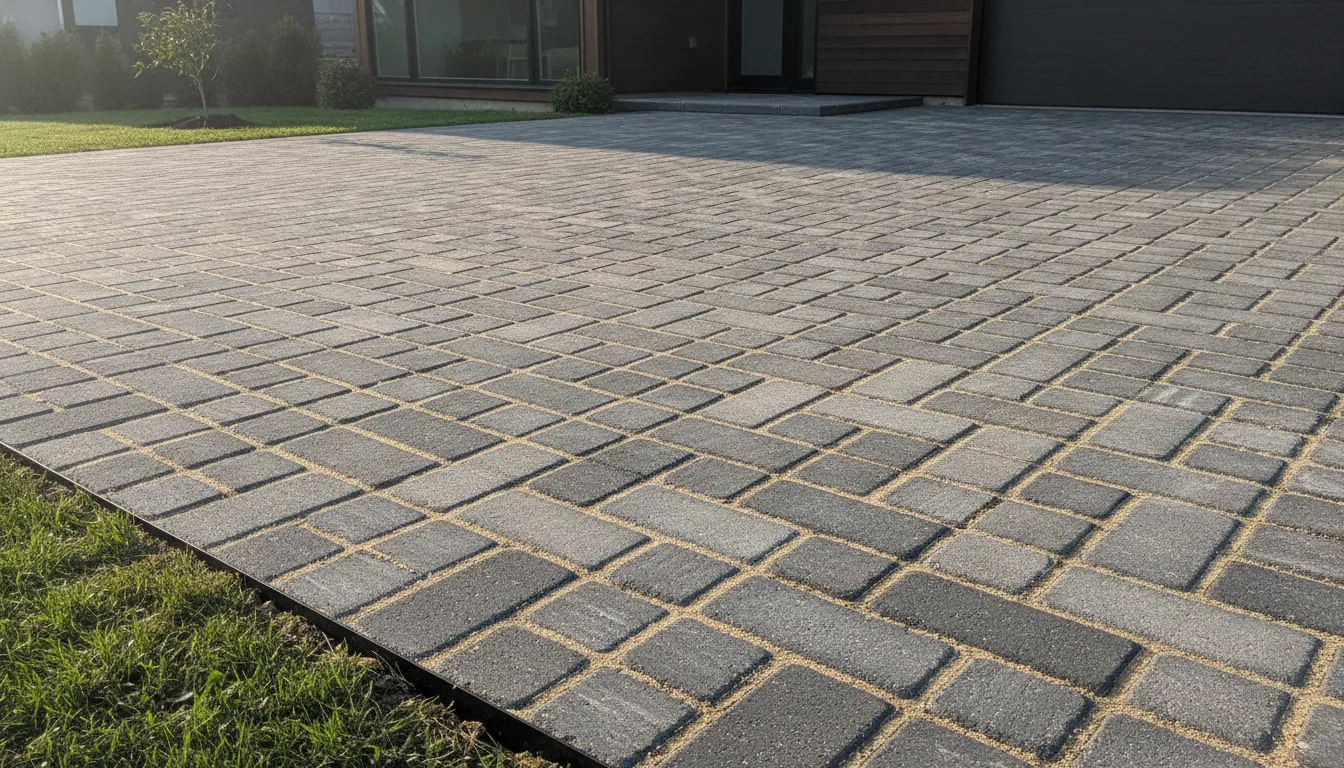
Look closely at the gaps between each stone once they are in place. A skilled crew keeps the lines straight and the joint spaces even. If some gaps are wide and others are tight, the stones may shift when cars drive on them. You also want to check the edges of the driveway where stones must be cut to fit. Clean, smooth cuts show that the crew took their time and used the right tools. Rough or jagged edges look bad and can weaken the overall structure.
Locked joints and stable edges
The best driveway builds use edge restraints on all sides to keep the outer stones from sliding out. Without these hard borders, the heavy weight of cars will push the pavers apart. Inside those borders, the crew sweeps polymeric sand into the joints and wets it to lock the stones together. This special sand hardens like glue to block weeds and keep water from washing away the base.
Walk across the surface to see if it is flat. There should be no lippage, which is when one stone sits higher than the next. A flat surface shows that the base is stable. True craft means that your driveway will stay beautiful and strong for years to come.
It is easy to focus on how beautiful the driveway looks on the first day. But real success is about how the driveway looks months or even years down the road. High-quality work can withstand heavy traffic and Southern California heat. If the base was not prepped right, the pavers will start to sag. A great crew builds for long-term strength, not just first-day style.
How to Get Started With a Licensed Paver Installer
Starting your project with a licensed builder is simple. The process begins with a design meeting and a custom 3D layout. Next, you get a written estimate valid for six months. The team handles all local permits and scheduling, while a dedicated manager oversees the entire build to completion.
Initial Design and Planning
Choosing professional driveway paver installers ensures your project starts on solid ground. Our expert team will sit down with you to discuss your layout goals. We will inspect your current driveway and help you select the best stones. Modern design software lets you view the final project layout before any work starts on your property.
The Detailed Written Estimate
A trusted general contractor will give you a clear, written project estimate that stays valid for six months. This detailed document lists every single part of the build, including deep soil excavation, base prep, and site drainage. Working with local paving installation experts means you will know all your costs before any work begins on your home.
Permits and Project Management
Dealing with city rules and building permits can be a major hassle for local homeowners. A full-service builder handles all local paperwork, engineering plans, and scheduling for you. They also assign a dedicated project manager to oversee the daily labor and keep you updated at every step of the build.
- Book your initial design meeting.
Schedule an in-person visit with our design team to discuss your goals, look at physical stone samples, and measure your current driveway space.
- Review your custom 3D model.
Examine a digital 3D model of your proposed driveway layout to see exactly how the new stones will fit your home, garage, and landscape.
- Get a written project estimate.
Receive a detailed written quote that is valid for six months, outlining all line items for soil excavation, base prep, paver choices, and drainage.
- Let us handle the city permits.
Save time and stress as our office team submits plans, obtains necessary city permits, and coordinates the start date for you.
- Work with your dedicated manager.
A single project lead will oversee the entire construction process from the first shovel in the ground to the final cleanup and inspection.
To start your driveway project today, call our team at (855) 202-2015 or visit our project request page to get started.
Frequently Asked Questions
What is the average labor cost to install pavers?
The labor cost to install pavers is about eight to fifteen dollars per square foot. This rate depends on site soil like clay and your driveway style. For projects in Southern California, hiring a licensed team ensures proper base work and lasting results. You can read our guide on driveway paver installation in Los Angeles to find more details about rates and needs.
How much does it cost to pave a 2,000-square-foot driveway?
For a large driveway of this size, the total cost often ranges from twenty thousand to forty thousand dollars. This price covers digging, base stones, drainage work, and the pavers. Special stones or sloped land can raise the total price. Working with skilled driveway paver installers ensures you get an exact quote that fits your own yard and goals.
What do you call someone who installs pavers?
People who lay these stones are often called paver installers, hardscape builders, or masonry experts. These experts handle the whole process from base work to final joint sanding. It is best to hire a licensed general contractor who can handle both 3D design and local permits. Working with a full-service team ensures your project is built to last.
Is pavers or concrete cheaper for a driveway?
Concrete often has a lower upfront cost than pavers. But pavers are very strong and do not crack like concrete slabs under heavy loads. Pavers are also easier to repair because you can replace single stones instead of pouring a new section. For the long run, pavers add more value and beauty to your home. You can read our guide on paver bricks vs concrete pavers to compare your choices.
Ready to Build a Durable, Stylish Driveway?
Ignoring proper base preparation and sub-grade soil compaction leads to shifting driveway pavers, unsightly cracked stones, and extremely costly future repair bills. Starting your professional driveway paver installation project today secures your installation timeline before the busy season begins and avoids any upcoming weather delays. Partnering with licensed local general contractors ensures that your new driveway is constructed with beautiful craftsmanship, modern styling, and long-lasting structural stability.
Ready to schedule your driveway design consultation? Our experienced team handles the entire design-build process including all required local permits. You can book your appointment online today to secure your spot. You can also call our office directly at (855) 202-2015 to request your custom 3D layout and begin planning.