Concrete Contractors Los Angeles: Your Complete Guide

Updated: Sep 14
A concrete project can look simple from the street, but its long-term performance depends on decisions made before the first pour. In Los Angeles, the right contractor must account for the existing site, intended use, drainage, slab design, finish, and how the new work fits the home.
For patios, driveways, walkways, and related site work, concrete contractors los angeles homeowners can rely on should manage preparation, forming, pouring, and finishing as one connected process. LevelWorks brings that design-build approach to residential projects, with durable workmanship, modern design, and clear communication from consultation through completion.
Concrete is versatile, but durability is not automatic. It depends on matching the material and construction details to the environment and service demands, then executing each phase carefully. LevelWorks is licensed, bonded, and insured in California, and can coordinate design, permits, and construction for a cohesive result. The range of available services is the best place to start when planning an outdoor improvement.
Schedule a free concrete consultation or call (855) 202-2015 to discuss your property, design goals, and next steps.
What Services Do Concrete Contractors in Los Angeles Provide?
Concrete work can shape nearly every part of an outdoor improvement project, from the surface beneath a patio table to the structural base of an addition.
LevelWorks coordinates concrete and paver work as part of a broader design-build process. That approach helps connect the visible finish with grading, drainage, access, permits, and the rest of the renovation plan.
Patios, driveways, and walkways
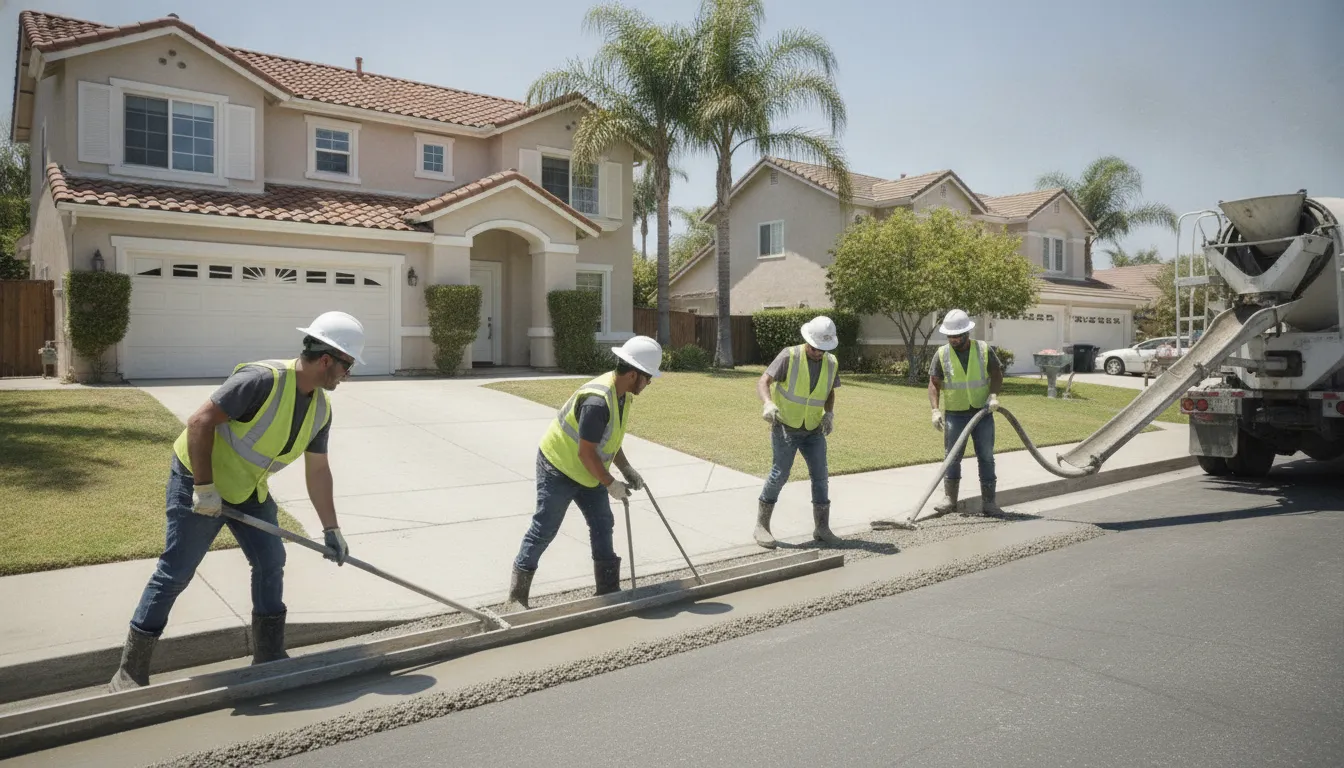
Patios create durable outdoor living space for dining, entertaining, and everyday use. Driveways need a surface that can handle vehicles, turning movements, and regular weather exposure. Walkways and sidewalks improve circulation between the home, driveway, yard, and other outdoor areas.
Each application calls for more than simply placing wet concrete. Site preparation, forming, pouring, and finishing all affect how the completed work performs over time. The appropriate slab geometry, support conditions, and material specifications also depend on the intended use. That is why a driveway should not be approached exactly like a residential sitting area.
Stamped and decorative concrete finishes
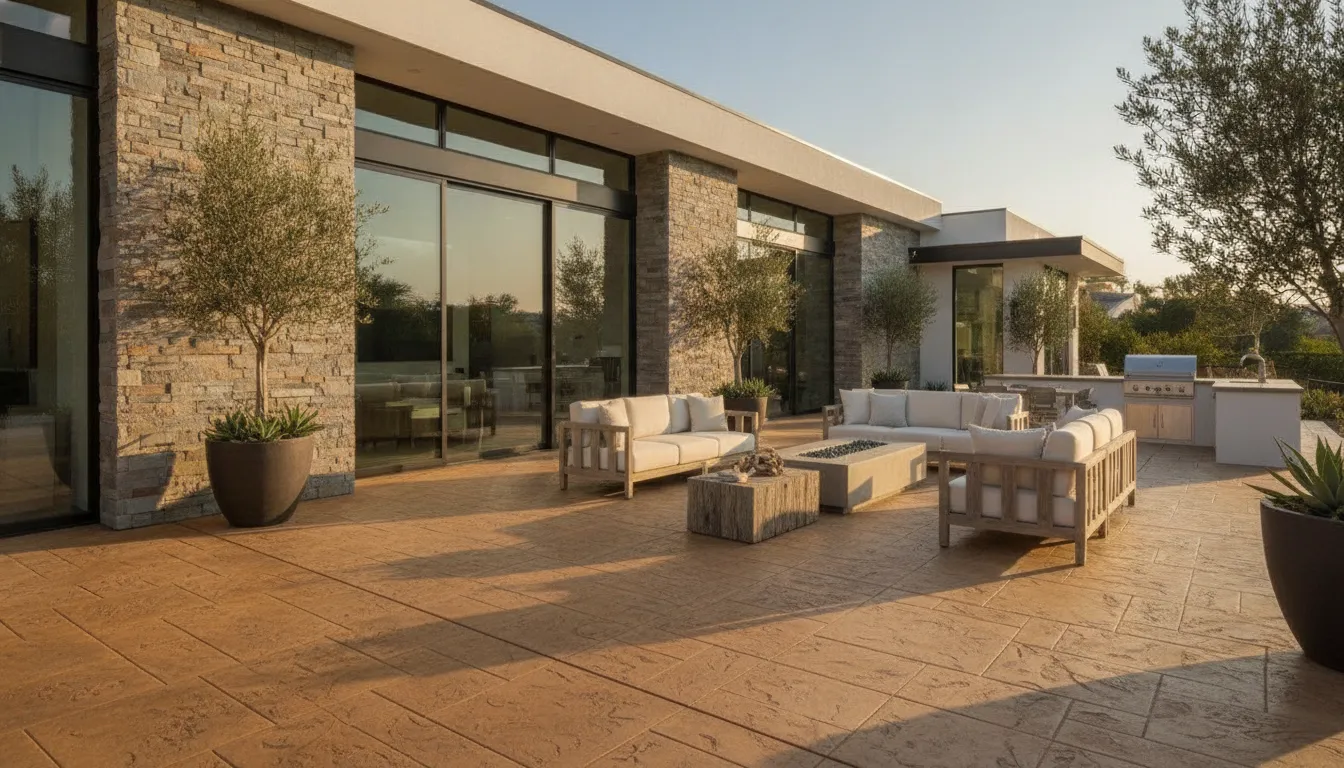
Decorative concrete can add visual character without limiting a project to a plain gray surface. Stamped patterns, integral or surface-applied color, borders, and carefully selected textures can complement a home's architecture and surrounding hardscape. The finish should be selected with maintenance, slip resistance, traffic, and the appearance of nearby materials in mind.
Slabs, site work, and structural concrete
Concrete contractors may also prepare slabs for additions, garages, workshops, outdoor kitchens, or other improvements. Related site work can include demolition, excavation, grading, base preparation, forming, reinforcement, drainage coordination, and managing transitions to existing surfaces. Foundations and other structural concrete require especially careful coordination because they support more than foot traffic or outdoor furniture.
Concrete is versatile enough to serve patios, driveways, sidewalks, foundations, and many other residential applications. Its durability is not automatic, however. Performance depends on matching the material and construction details to the environment and service load, then executing the preparation and placement correctly.
Concrete repairs and connected hardscape work
Repair work may address cracking, spalling, uneven surfaces, worn finishes, or localized damage. The right solution depends on the cause and extent of the problem. In some cases, a targeted repair is appropriate. In others, replacement and improved site preparation provide a more reliable result. Concrete work may also be coordinated with pavers, walls, patios, and other exterior improvements.
For a broader look at available services, review LevelWorks' professional concrete contractors in Los Angeles page. A design-build contractor can evaluate the full site and recommend a practical combination of surfaces, structure, and finishes.
Why Does Site Preparation and Finishing Matter for a Durable Concrete Driveway or Patio?
A durable driveway or patio is engineered for its setting, not simply poured and left to harden. Concrete performance depends on a combination of material properties matched to the environment and the loads the slab will handle. In Los Angeles, that means accounting for moisture, drainage, sun exposure, soil movement, vehicle traffic, and the way water reaches the slab during storms.
What happens before the concrete is poured?
Site preparation establishes the support system beneath the finished surface. A professional crew removes unsuitable soil, addresses soft or unstable areas, grades the site for drainage, and compacts the subgrade evenly. Depending on the property, a properly placed and compacted base may also be needed. If the ground settles unevenly, even a well-designed concrete mix can crack, shift, or create low spots where water collects.
Forms then define the slab's dimensions, edges, elevations, and transitions to walkways, landscaping, garages, or existing paving. This is also the stage to plan control joints and reinforcement. Rebar or wire mesh does not eliminate every crack. But it can help manage cracking and maintain the slab's integrity when it is correctly specified and supported within the concrete.
How do mix design and finishing affect performance?
The concrete mix should match the project rather than rely on a one-size-fits-all specification. Strength, workability, slab thickness, geometry, and expected service loads all influence the design. Proper slump matters as well. Adding excess water on site may make concrete easier to place, but it can weaken the finished material and increase shrinkage.
During placement, the crew must consolidate the concrete, maintain consistent thickness, and finish the surface without bringing too much water to the top. The final texture should provide practical traction while supporting the desired appearance. Careful timing matters because finishing concrete too early or too late can affect the surface and its resistance to wear.
Why are curing and sealing important in Los Angeles?
Curing gives the cement paste time to develop strength and retain the moisture needed for that process. Protecting the slab during early curing helps reduce premature drying and shrinkage. After the concrete has properly cured, an appropriate sealer can help limit water penetration, staining, and surface wear. Sealing is not a substitute for drainage or sound construction, but it can support maintenance when selected for the surface and used according to the manufacturer's directions.
Los Angeles does not face the same routine freeze-thaw exposure as colder regions, yet environmental conditions still matter. Moisture, changing temperatures, runoff, and occasional use of deicers in colder mountain areas can affect concrete differently than a mild, dry setting. Thoughtful preparation, forming, pouring, finishing, curing, and sealing create a more durable result that performs better, looks intentional, and protects the home's function and long-term value.
What Does Concrete Work Cost in Los Angeles?
There is no single price for concrete work in Los Angeles because the project scope matters more than the material alone. A small, accessible patio with straightforward site conditions will be priced differently from a sloped driveway that requires demolition, excavation, reinforcement, and detailed finishing. A useful estimate should account for the complete installation, not just the amount of concrete delivered.
Square footage is the starting point, but slab thickness also affects the volume of material and the structural design. Site preparation can add significant work when the area contains old concrete, unstable soil, roots, drainage issues, or a difficult access route. Demolition and hauling are separate considerations when an existing driveway, walkway, or patio must be removed before the new work begins.
Reinforcement is another project-specific factor. Depending on the intended use and site conditions, the design may call for rebar or other reinforcement to help the slab handle expected loads. Edges, steps, control joints, drainage details, and connection points to existing hardscape can also affect labor and materials.
How finish choices change the estimate
A basic broom finish is generally simpler than a decorative stamped finish. Stamped concrete requires more detailed forming, timing, color or release considerations, and finishing skill. Those choices can change both the installation process and the long-term maintenance expectations. Other options, such as borders, contrasting colors, exposed aggregate, or custom patterns, should be evaluated alongside the overall design rather than treated as isolated upgrades.
Homeowners often ask about the cost of a concrete driveway in Los Angeles, including a driveway around 200 feet long. That question cannot be answered responsibly without the driveway's width, thickness, existing surface, slope, access, drainage needs, reinforcement, and finish. A long driveway may involve more than a simple pour, especially if demolition or grading is required.
LevelWorks provides free estimates that remain valid for six months, giving you time to compare the scope, materials, and finish options before committing. The estimate should clearly explain what is included, from preparation through final finishing, so you can compare proposals on value and completeness instead of a single headline price.
Project type | Typical use | Main cost drivers | Common finishes |
Patio | Outdoor dining, entertaining, daily living space | Size, site slope, drainage, decorative pattern | Broom, stamped, exposed aggregate |
Driveway | Vehicle access, parking, turning area | Width, length, thickness, demolition, reinforcement | Broom, brushed, stamped |
Walkway or sidewalk | Circulation between home, yard, and hardscape | Path length, grading, transitions, public right-of-way | Broom, light broom, mat |
Slab and site work | Additions, garages, workshops, outdoor kitchens, foundations | Grading, base prep, structural design, permit coordination | Smooth trowel, structural finish |
Do You Need a Permit for Concrete Work in Los Angeles?
In many cases, yes. Concrete work that changes how a property is used, drains, supports loads, or connects to public space may require permits, plan review, and inspections. The exact requirements depend on the project scope, site conditions, and whether the work falls under Los Angeles City or County jurisdiction.
A small cosmetic patio overlay may not require the same approvals as a new driveway, retaining wall, or major site improvement. That distinction is important. Replacing or resurfacing an existing surface can be relatively limited, while new construction may affect drainage, setbacks, grades, structural safety, or access from the street.
Projects that commonly need closer permit review
- Driveways:
A new or substantially modified driveway can involve grading, drainage, curb access, and connections to the public right-of-way.
- Patios and slabs:
A basic surface treatment may be minor, but a new elevated slab, covered patio, foundation, or project involving significant grading can trigger additional requirements.
- Retaining and structural walls:
Walls that hold back soil or support other construction need careful design. Their height, location, loads, and relationship to neighboring property can affect permitting and inspections.
- Sidewalks and frontage work:
Concrete that abuts or alters a public sidewalk, curb, driveway apron, or other right-of-way feature may involve agency standards beyond the work on private property.
- Larger site work:
Extensive excavation, grading, drainage changes, accessory structures, and coordinated outdoor renovations may require a broader review.
Permit responsibility should be settled before demolition or concrete placement begins. Proceeding without required approvals can lead to delays, correction work, inspection problems, or difficulty documenting improvements later. It can also create conflicts when a project crosses the boundary between private property and public infrastructure.
How a design-build contractor simplifies compliance
LevelWorks uses a design-build process that coordinates planning, permit handling, code compliance, and construction rather than treating each step as a separate handoff. The team reviews the proposed work, identifies approval needs, and helps coordinate inspections before the crew moves into the next phase. That process is especially useful for Los Angeles properties where lot conditions, older construction, access limitations, and jurisdictional requirements can vary from one project to the next.
As a licensed, bonded, and insured California contractor, LevelWorks brings local knowledge of Los Angeles building codes to concrete and hardscaping projects. Homeowners can discuss the intended use, drainage concerns, finish, and property constraints during the planning process, then receive a clear estimate for the work. For related project details, review LevelWorks' pavers and concrete work services.
How Do You Choose the Right Concrete Contractor for Your Project?
The right contractor should do more than pour and finish concrete. They should understand your property's layout, the intended use of the space, local requirements, and the details that protect the finished surface over time. A good selection process helps you compare contractors on workmanship and accountability, not just the lowest initial number.
Confirm licensing, bonding, and insurance
Start by confirming that the contractor is licensed with the California Contractors State License Board and carries appropriate insurance. Bonding provides another layer of protection, while insurance helps address risks that can arise during construction. Ask for current documentation and make sure the legal business name on the paperwork matches the name on your proposal.
LevelWorks is licensed, bonded, and insured in California. That gives homeowners a clear starting point for evaluating responsibility before discussing design details or scheduling work.
Look for relevant Los Angeles experience
Concrete work needs to fit the site. A contractor familiar with Los Angeles homes can account for sloped lots, tight access, drainage, existing hardscape. And the relationship between a new slab, driveway, walkway, or patio and the rest of the property. Ask to see projects similar in scale and purpose to yours, rather than relying only on a general gallery.
Relevant experience also includes the work beneath the visible finish. Ask how the team handles excavation, grading, base material, forms, reinforcement, joints, drainage, placement, and curing. The contractor should explain these choices in plain language and connect them to how you plan to use the space.
Compare written estimates and the finish approach
A transparent written estimate should identify the project scope, materials, quantities, preparation work, finish, allowances, schedule assumptions, and items that could change the cost. Be cautious when a proposal uses broad language such as "concrete work" without describing demolition, disposal, site preparation, or finishing. Two estimates may look different because one includes essential preparation while the other leaves it unclear.
Ask how the contractor will protect adjacent surfaces and maintain a clean, organized site. Discuss the finish you want, including texture, color, edges, control joints, and transitions to landscaping or existing pavement. A professional should be willing to show samples or explain how the proposed finish will look in the setting.
Check references and communication before signing
Speak with recent clients when possible, and ask whether the contractor communicated consistently, kept the site orderly, handled changes fairly, and completed the work as promised. You should also be able to identify who will answer questions once construction begins. Clear communication is especially important when concrete work is part of a larger renovation with design, permitting, and multiple trades.
LevelWorks combines design and construction, offers free estimates with 3D design, and manages projects with direct communication from planning through completion. You can review its broader general construction services before requesting a conversation about your concrete project.
Why Homeowners Across Los Angeles Trust LevelWorks for Concrete Projects
Concrete work has to do more than look good on the day it is finished. A driveway, patio, walkway, or site-work improvement should fit the property, support everyday use, and complement the home's architecture for years to come. LevelWorks brings that long-term perspective to each project as a licensed, bonded, and insured California contractor.
Founded around 2014, LevelWorks has more than a decade of experience serving homeowners throughout Los Angeles and Orange County. That experience includes the details behind a successful installation, from planning and site preparation to forming, pouring, finishing, and coordinating the work with the rest of a renovation. The result is a process built around both craftsmanship and clear communication.
A design-build process from the first idea through completion
LevelWorks is a full-service design-build general contractor, so design and construction are coordinated rather than treated as separate handoffs. During a free consultation, the team can discuss how a new patio, driveway, or hardscape should function. How it should connect to the home, and which materials and finishes support the desired modern look.
When visualizing the project would help, 3D design gives homeowners a clearer view of layout, proportions, and finishes before construction begins. LevelWorks also manages project coordination and permit handling, helping keep the work aligned with Los Angeles requirements while reducing the administrative burden on the homeowner. The company provides estimates that remain valid for six months, giving clients time to make informed decisions without feeling rushed.
Craftsmanship that balances durability and modern design
Strong concrete results depend on more than the surface finish. The mix, slab geometry, drainage, site conditions, and installation sequence all influence performance. LevelWorks combines careful construction practices with an eye for clean lines, practical layouts, and finishes that feel intentional within the larger property. This approach is useful for everything from a straightforward driveway replacement to a more involved outdoor living or site-work project.
Homeowners also benefit from having one team able to connect concrete work with broader construction needs. LevelWorks can coordinate related improvements through its general construction services, keeping the scope organized and the design cohesive instead of dividing responsibility among several disconnected contractors.
For a project that needs thoughtful planning, dependable execution, and a modern finish, speak with a team that can manage the work from concept to completion.
Schedule a free consultation with LevelWorks or call (855) 202-2015 to discuss your concrete project.
Frequently Asked Questions
What services do concrete contractors in Los Angeles offer?
Services can include patios, driveways, walkways, foundations, demolition, grading, site preparation, forming, pouring, finishing, and related hardscaping. A full-service design-build contractor can coordinate the design, permits, construction, and final details so the concrete work fits the rest of your property.
How much does concrete work cost in Los Angeles?
There is no reliable single price without reviewing the project. Cost depends on the area, demolition, access, grading, reinforcement, slab design, finish, drainage, and selected materials. A site visit and detailed estimate are more useful than a per-cubic-yard number because they account for the complete scope.
Does hiring a concrete contractor require a permit?
Permit requirements depend on the project scope, property conditions, and applicable local requirements. Driveways, patios, grading, structural work, and changes near existing utilities may involve different reviews. LevelWorks can identify the required approvals and coordinate permit handling as part of its design-build process.
How do I choose the right concrete contractor for my project?
Look for a contractor who is licensed, bonded, and insured in California, explains site preparation and drainage, provides a written scope, and communicates clearly about schedule and finishes. Ask how the proposed mix, slab geometry, and installation method suit your site. LevelWorks also offers a free consultation and 3D design to help you evaluate the plan before construction.
Schedule Your Free Concrete Consultation
Thoughtful planning can help your patio, driveway, or site work support daily use while complementing your home's design. LevelWorks Construct & Renovate can discuss your goals, review the project scope, and outline a practical next step.
Schedule a free consultation and estimate through LevelWorks' project inquiry page, or call (855) 202-2015.