How to Choose the Right Paver Contractor for Your Home

Updated: Sep 14
A paver project can look simple from the surface, but its durability depends on decisions made long before the first stone is set. The right professional should be able to understand how you want to use the space. Explain the scope clearly, plan for drainage and grade, and show how the finished installation will hold up over time. A low bid may be appealing, but it is only useful when it represents the same level of preparation, materials, labor, and protection as the other proposals.
The right paver contractor is licensed and insured, experienced with projects like yours. Willing to provide references and a detailed written scope, and clear about preparation, materials, schedule, warranty, and payment terms. Compare qualified professionals on the complete value of their proposals, not price alone.
Start by defining your goals, budget, and priorities for the patio, walkway, driveway, or other outdoor surface. Then ask each candidate how they will approach the site, what can affect the estimate, and who will manage communication from consultation through completion. Verify licensing and insurance, speak with references, and look closely at completed work when possible. The process should feel collaborative and transparent, without pressure to decide immediately or pay the entire amount upfront.
Once you have a short list, the details of each proposal will reveal how seriously the company approaches your project. Reviewing those details carefully can help you separate polished promises from a practical plan built around quality and long-term value.
What Should You Look for When Choosing a Paver Contractor?
The right paver contractor should offer more than an attractive proposal. Look for verifiable licensing and insurance, a detailed written scope, relevant completed work, and communication you can rely on throughout the project. A careful selection process helps you compare qualified professionals instead of choosing based on a low number alone.
Verify licensing, insurance, and workers' compensation
Ask for the contractor's license information and verify it through the appropriate state or county agency. You should also request proof of current general liability insurance. If employees or other workers will be on your property, confirm that workers' compensation coverage is active. Without it, a homeowner could face financial risk if someone is injured while working on the project.
Licensing and insurance do not replace good judgment, but they establish an important baseline. For a California project, a licensed, bonded, and insured team should also be prepared to explain how permits, local requirements, and site conditions will be handled.
Compare written bids by scope, not just by total
Request a written bid that explains what is included. It should identify the paver material, project dimensions, excavation and base work, edge restraint. Drainage or grading work, joint sand, cleanup, expected completion date, payment schedule, and warranty terms. When two bids appear different, the scope often explains why. Comparing only the lowest total can result in omitted preparation work or an outcome that does not meet your expectations.
Use the proposal conversation to evaluate communication, too. A contractor who answers questions directly and records changes clearly is more likely to manage the project with transparency.
Check references and view completed work
Ask trusted friends, colleagues, real estate professionals, or local building groups for recommendations, then verify the contractor's references yourself. Speak with previous clients about schedule communication, workmanship, site care, and how the team handled unexpected issues. If possible, view a completed project or an active job site. Real work provides more useful evidence than a gallery alone.
Know the warning signs
Be cautious if someone pressures you to decide immediately, asks for the entire payment upfront. Insists on cash only, or arrives uninvited claiming to have leftover materials from another job. These tactics are not a substitute for a written scope and verifiable credentials. Take time to compare options, confirm the details, and choose a contractor who is willing to earn your confidence through clear answers and documented work.
For a closer look at professional pavers & concrete services, review the scope of work your property requires before requesting proposals.
Why Does Proper Base Preparation Matter for Paver Projects?
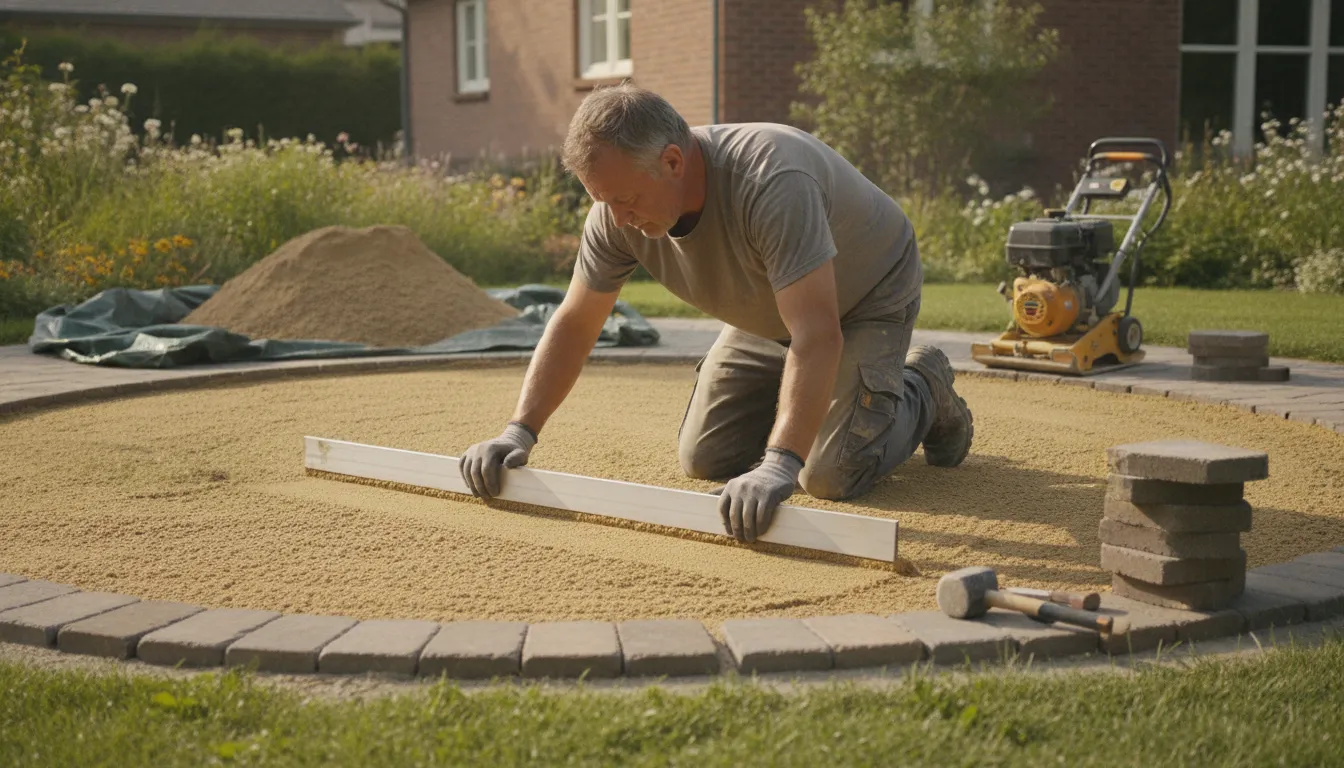
A paver patio is only as stable as the surface beneath it. The visible pavers may be attractive, but excavation, grading, drainage, and compaction determine whether that surface stays level after months of foot traffic, rain, and normal soil movement. This is why base preparation is one of the clearest differences between careful workmanship and a shortcut that looks acceptable on installation day.
A dependable paver contractor begins by excavating to the depth required for the site and intended use, rather than placing materials directly over uneven soil. The exposed area is then shaped to the planned grade. That grade gives water a route away from the patio instead of allowing it to collect beneath the pavers. Where saturated soil can weaken the foundation and contribute to settling.
What does the paver base do?
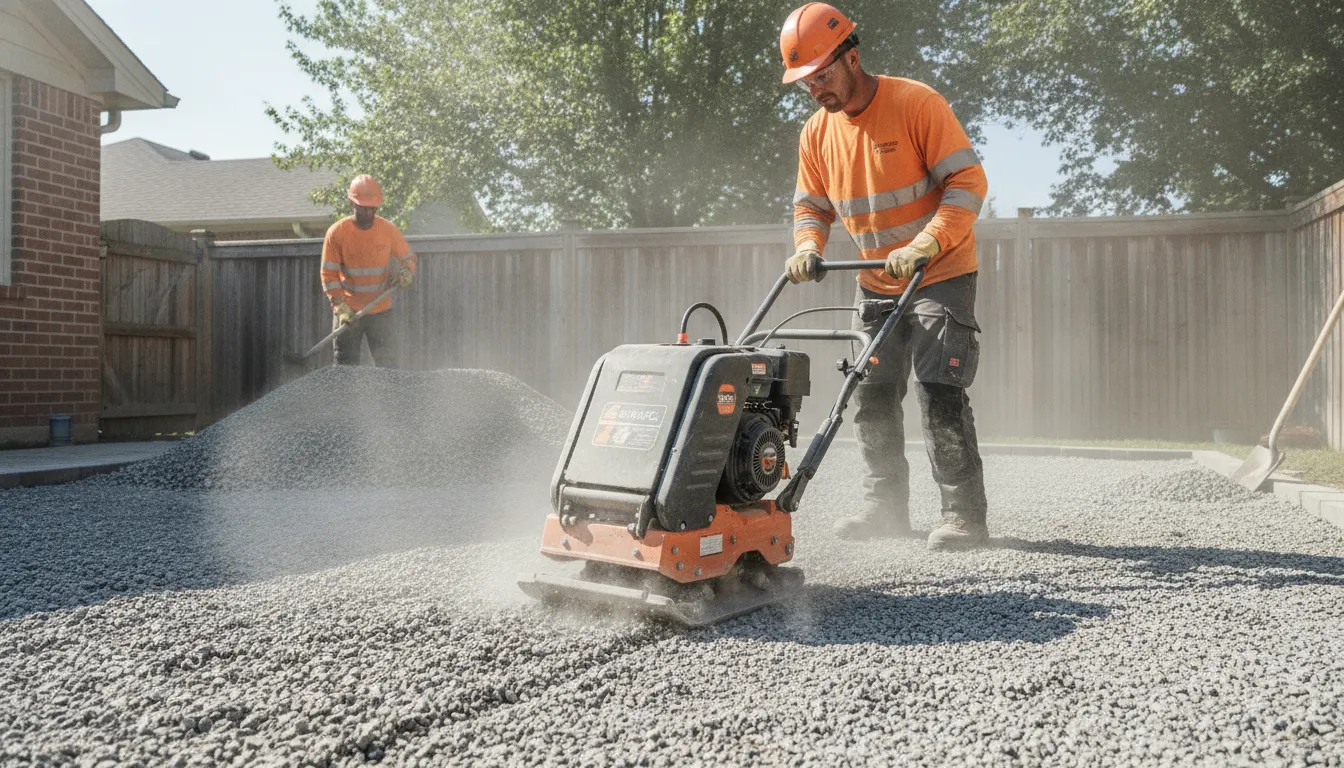
Crushed stone or another suitable granular base creates the load-bearing layer below the bedding material and pavers. It must be placed evenly and compacted thoroughly, often in controlled lifts, so the finished surface has consistent support. If the base is thin, uneven, or poorly compacted, low spots can develop. Individual pavers may rock, edges may separate, and the patio can lose its clean lines.
Drainage and base preparation also work together. A well-planned slope helps move water across and away from the project, while the compacted aggregate provides a stable foundation. The right approach depends on existing grades, soil conditions, nearby structures, and how the space will be used. A site assessment is more reliable than assuming every patio needs the same excavation depth or material quantity.
How do edge restraint and joint sand protect the finished surface?
Edge restraint helps keep the outer pavers from spreading under repeated pressure. Joint sand fills the spaces between pavers and supports the interlocking surface. When those joints are properly filled and maintained, they help limit movement and make it harder for weeds to establish. These details are easy to overlook because they are less dramatic than selecting a color or pattern, but they contribute directly to the patio's long-term performance.
Base problems often reveal themselves months later, after the installation crew has left and the first heavy rains or seasonal changes arrive. LevelWorks Construct & Renovate treats site preparation as part of the finished design, not an invisible step to rush. Our team plans the grade, prepares and compacts the base, and addresses the details that help a paver project remain durable. Review our pavers & concrete services to see how careful preparation fits into a complete outdoor project.
How Do You Judge a Paver Contractor's Craftsmanship and Experience?
A polished paver project depends on more than the material selected. Before hiring a contractor, review several completed projects that resemble your goals, including the size, layout, grade, and level of detail you expect. A portfolio can show whether the crew consistently delivers clean work, or only presents one unusually strong example.
Ask to see finished patios, walkways, driveways, or pool decks in person when possible. Photos can hide uneven transitions and unfinished edges. A reputable contractor should also be comfortable providing references and, when appropriate, showing a current project in progress. Pay attention to how the team communicates about the work, not only how the final installation looks.
What details reveal the quality of an installation?
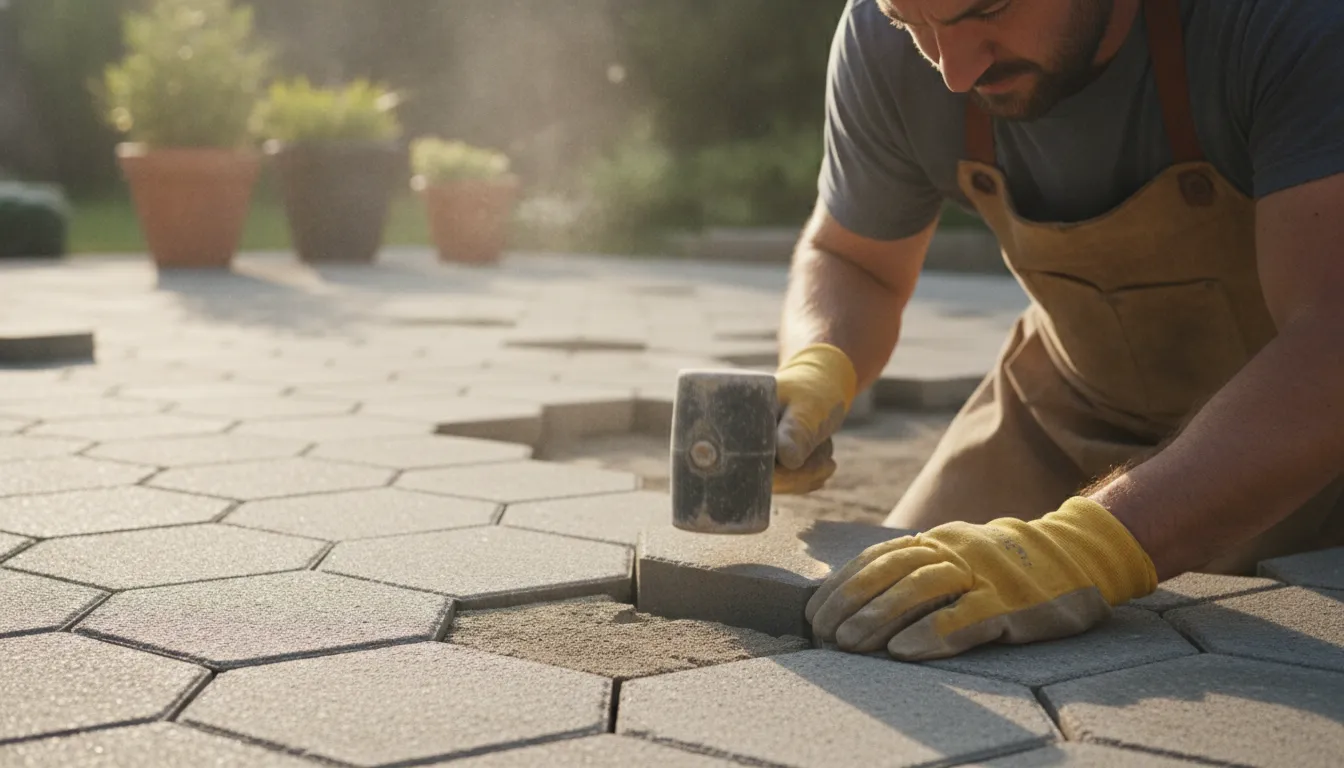
Look closely at the edges first. Straight, secure edge restraint helps keep the pattern from spreading over time. Joints should appear consistent, and the pattern should remain aligned around corners, curves, steps, and transitions. Notice whether cuts are clean and intentional rather than narrow slivers placed along a visible border. The surface should also look even without abrupt dips, rocking stones, or areas that collect water.
Ask how the contractor prepares the base, manages grading, and directs drainage before discussing the surface pattern. Skilled paver installation is not simply a matter of placing stones on the ground. Excavation, compaction, edge restraint, and joint materials all contribute to a stable, repairable result. The contractor should explain these decisions in plain language and identify how the plan responds to your property's existing slope and runoff.
How can you confirm the crew has relevant experience?
Ask how long the crew has installed pavers, who will supervise the work, and whether the people you meet will remain involved through completion. Confirm that the company is licensed, bonded, and insured, and request documentation rather than relying on a casual assurance. Compare written proposals by scope, materials, preparation, warranties, references, and completion expectations, not by price alone.
It is also useful to understand who owns the decisions when design, grading, construction, and finishing overlap. LevelWorks uses a design-build model, keeping one accountable team involved from consultation through the final walk-through. You can learn more about LevelWorks experience and leadership, or review these practical considerations when hiring a paver patio construction company. The right choice is the contractor who can show careful work, explain the installation plan, and remain accountable for the complete project.
How Much Should a Paver Patio Cost?
There is no responsible one-size-fits-all price for a paver patio. A small 12-by-12 patio and a 20-by-20 entertaining space may use similar materials, but their total scopes can be very different. The final proposal should reflect the patio's dimensions, the paver selected, the condition of the site. Access for equipment, drainage needs, demolition, edge restraints, and the amount of base preparation required.
Contractors often price paver work by square foot, but that does not make square footage the only cost variable. A smaller patio can have a higher per-square-foot cost because mobilization, layout, delivery, and setup are spread across less area. Larger patios may require more excavation, grading, material handling, and coordination with adjacent landscaping or structures.
What makes one paver patio estimate higher than another?
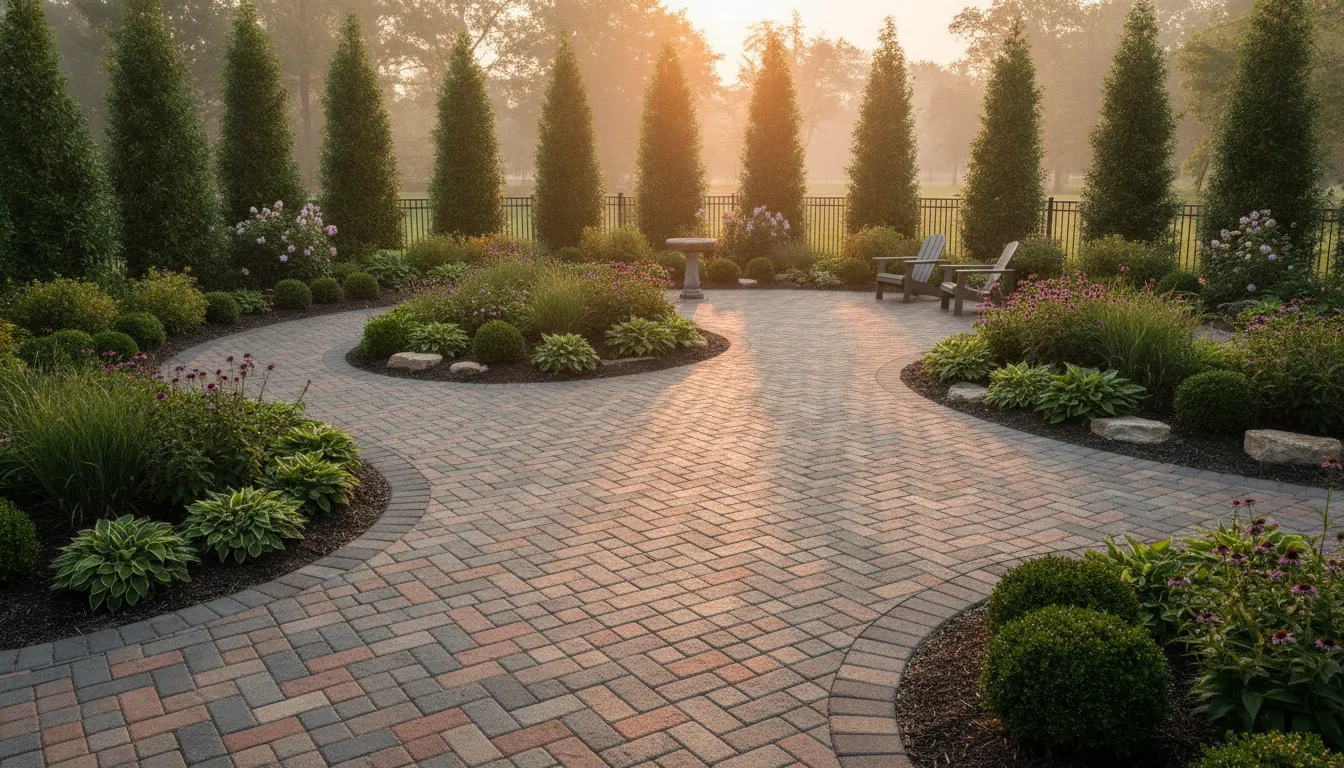
Material grade is one visible difference. Standard concrete pavers, premium textures, larger formats, natural stone, intricate borders, and mixed patterns each carry different material and labor requirements. Site complexity can matter just as much. A sloped yard, narrow side access, poor drainage, existing concrete, tree roots, or difficult demolition can add preparation and labor before the first paver is installed.
Base preparation is a particularly important cost driver. A durable installation generally requires appropriate excavation, a properly compacted aggregate base, accurate grading, edge restraint, and joint material. Those steps are not decorative, but they help reduce settling, shifting, weed growth, and drainage problems. When an estimate is dramatically lower than the others, ask whether excavation and compaction are fully included. The lowest bid may be omitting the work that protects the patio over time.
Are pavers cheaper than concrete?
Concrete often has a lower upfront cost, especially for a simple, accessible layout. Pavers can require more labor and preparation. But they offer a practical repair advantage: individual units can typically be removed and replaced if a section is damaged or if future utility work affects the patio. That repairability, along with design flexibility and lasting outdoor appeal, may justify the larger initial investment for some homeowners.
Consideration | Pavers | Concrete |
Upfront cost | Often higher because of materials and preparation | Often lower for a simple layout |
Repairability | Individual units can be removed and replaced | Damage usually requires patching or replacement of a slab |
Design flexibility | Wide range of colors, patterns, and shapes | More limited styling options |
Long-term maintenance | Simple joint sand and spot repairs | Sealing and crack management over time |
For a useful comparison, review the scope rather than comparing totals alone. Confirm the material, excavation depth, base thickness, drainage approach, edge restraints, joint sand, cleanup, warranty, and exclusions. The pavers & concrete services team should be able to explain what is included and why the recommended construction method fits the site.
Before accepting a proposal, share your desired use, finish, and budget range, then ask for a written estimate that leaves room for site conditions discovered during preparation. That creates a clearer basis for comparing qualified contractors without turning an early conversation into a misleading fixed promise.
Why Clear Communication and Project Management Matter in a Paver Project
A well-built paver project depends on more than attractive materials and careful installation. It also depends on an organized process that keeps the homeowner informed from the first consultation through the final walkthrough. Clear communication helps everyone understand the design, scope, schedule, budget, and decisions that can affect the finished result.
Before work begins, a reliable contractor should explain what the proposal includes. That may cover demolition, excavation, base preparation, drainage, edge restraint, paver installation, cleanup, permits, and any related concrete or landscaping work. A written budget makes it easier to compare proposals accurately and identify allowances or exclusions before they become surprises. Broad consumer guidance similarly recommends evaluating the full scope, warranties, references, completion dates, and price rather than choosing based on the lowest bid alone.
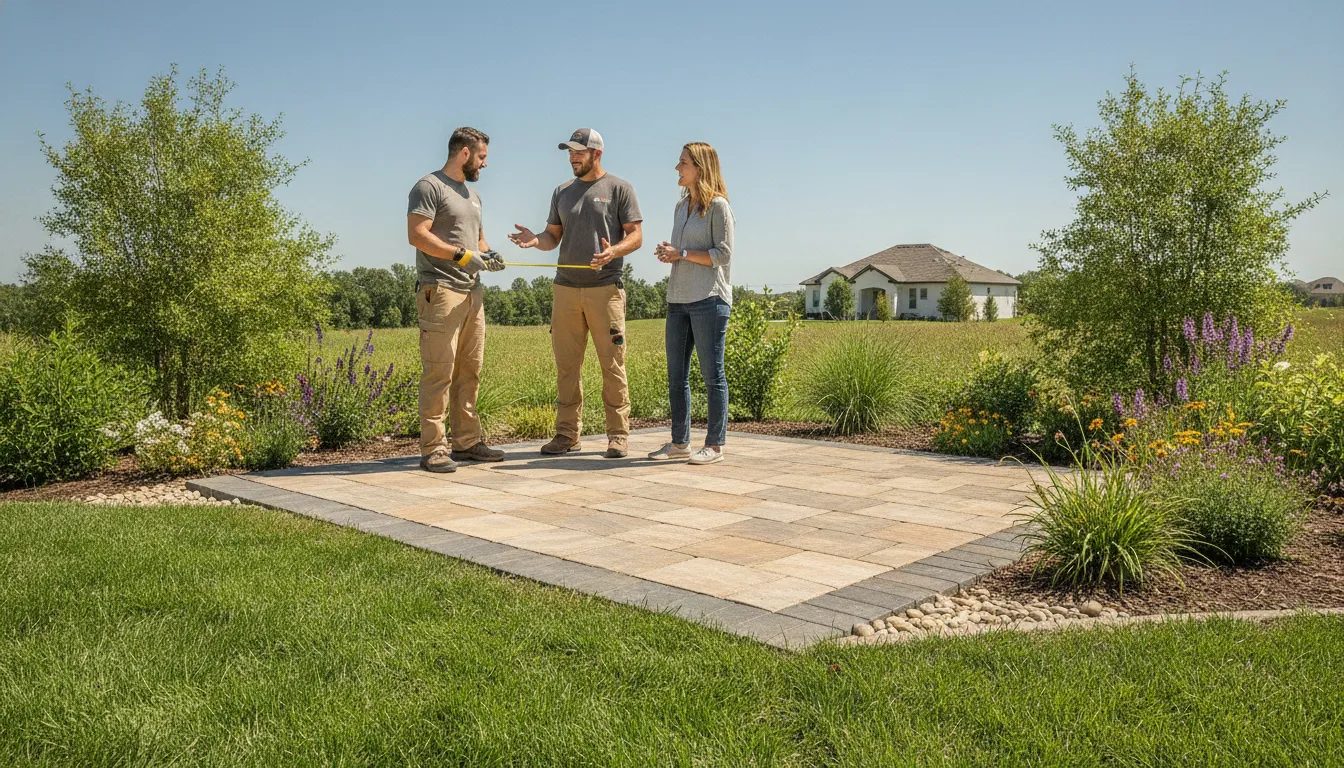
One accountable team reduces confusion
Design-build project management creates a single point of accountability for the work. Instead of coordinating separate designers, installers, and subcontractors on your own, you can work with one team that carries the project from planning into construction. This makes it easier to resolve questions quickly, maintain design intent, and keep changes connected to both the schedule and the budget.
That structure is especially valuable when a paver project involves grading, drainage, steps, walkways, retaining features, or transitions to an existing patio. A decision made in one area can affect another, so the team should explain those relationships before moving forward. Regular updates should also cover what has been completed, what happens next, and whether any site condition requires a documented adjustment.
LevelWorks uses a design-build model to provide comprehensive project management from consultation through final execution. Homeowners can explore the company's residential construction and remodeling services or review its pavers & concrete services to see how outdoor work fits within a broader renovation process. The goal is not simply to install pavers, but to create a collaborative experience with clear expectations and a finished space built for long-term value.
Request a free paver project consultation and call (855) 202-2015 to discuss durability, design, and budget with the LevelWorks team.
Frequently Asked Questions
What should you look for when choosing a paver contractor?
Look for a contractor who is licensed, insured, experienced with base preparation, and willing to provide a detailed written proposal. Compare the scope, warranty, references, schedule, and price instead of choosing solely on the lowest bid. Verifying licensing and insurance before hiring is a standard, sensible step for any home improvement project.
Why is base preparation important in paver installation?
Excavation and a properly compacted base help prevent settling, shifting, weed growth, and drainage problems. Ask how the contractor will address soil conditions, grade, edge restraint, and joint sand. A finished surface can look excellent at installation but still fail early if the supporting layers are not prepared correctly.
How should you compare paver contractor estimates?
Ask each contractor to price the same scope, including demolition, excavation, base materials, installation, drainage work, edge restraint, cleanup, and warranty coverage. A lower total may reflect omitted preparation rather than better value. Getting bids in writing and evaluating scope, warranties, references, completion dates, and price is the reliable way to compare candidates fairly.
Is it cheaper to lay pavers or concrete?
Concrete often costs less upfront, but pavers can offer practical long-term advantages because individual units can be removed and replaced when repairs are needed. The right choice depends on the site, design, drainage requirements, material selection, and installation quality. Compare the full project scope and expected maintenance, not just the initial price.
Ready to Choose the Right Paver Contractor?
A thoughtful consultation can help you compare project needs, material options, and contractor fit before work begins. LevelWorks can discuss your paver project and help you plan a durable, stylish result. Request a free paver project consultation or call (855) 202-2015 to get started.