Outdoor Pavers: Popular Patterns and Design Inspiration

Updated: 7 days ago
Sun-baked backyard concrete eventually cracks and devalues a premium Los Angeles property. Replacing worn surfaces with stylish stone blocks creates a durable outdoor living space for your family.
Outdoor pavers are the best choice for Southern California homeowners who want strong, beautiful patios, paths, and pool decks. These versatile stones come in simple types like concrete, clay, and porcelain, which makes it easy to create custom looks. By choosing the right layout pattern, you can set a clear design style and guide foot traffic through your yard. According to design research from Tunxis Community College, the pavement laying pattern is crucial. It is the single best way to express a specific look or feel in an outdoor space. Selecting the right mix of block shapes ensures your new yard surfaces stay strong under heavy loads while matching the look of your house.
But how do you find the right arrangement of stones for your own backyard? Start by exploring the most popular paver patterns and how each layout shapes your space's look, feel, and long-term strength.
Outdoor Paver Patterns Every LA and Orange County Homeowner Should Know
Every outdoor living space has its own vibe. When you plan a patio or path, you want to set a clear tone. Using many styles of outdoor pavers is a great way to do this. As shown in a study of modern paving patterns, the laying style is the best tool to express the look and feel you want. Whether you want a clean modern space or a rustic garden path, your pattern choice sets the stage.
In Los Angeles and Orange County, curb appeal is key to home value. Paver patterns can make a home look more stylish. A well-chosen layout draws the eye and highlights your landscaping. It turns a simple walkway or pool deck into a main feature of your yard. Choosing the right pattern is the first step in creating a lovely and clean hardscape.
Visual impact of layouts
The angle of your pavers can change how large your space feels. For instance, running bond patterns can make a narrow path look much wider. Laying pavers at an angle can make a small patio feel more open. These design tricks help you get the most out of your backyard space. It helps you design a space that feels warm and welcoming.
To get these results, you need precise plans and skilled craft work. Homeowners in Southern California often seek out professional paver installation services to ensure their layout is done right. Expert crews know how to align each stone to match your home's style. They also make sure the layout fits the shape of your outdoor living area.
Endless design alternatives
Modern paving stones are highly flexible. Today, makers cut and mold pavers to create a wide range of shapes and sizes. According to research on modern paving patterns, these options give you nearly endless layout choices for your yard. You are no longer tied to basic squares or rectangles. Homeowners can mix many sizes and angles to create custom looks.
These design options let you match any building style. For instance, a classic brick look fits an older home, while large, clean slabs suit a modern look. You can use bold borders to frame your patio or highlight a fire pit. This design freedom means your outdoor space can be as unique as your indoor rooms. It gives you full control over your home's outer style.
Strength and weight distribution
Patterns do more than just look good. They also help hold the pavers in place. Some layouts, like herringbone, lock the stones tightly. This interlocking bond spreads out weight from heavy foot traffic or patio furniture. It keeps the stones from shifting over time, even under heavy use. A strong layout ensures your walkway or pool deck stays flat and safe.
When stones shift, it can cause tripping hazards or let weeds grow in the joints. Interlocking patterns help prevent these issues by sharing the load across many pavers. The right layout makes your hardscape last much longer. This is crucial for areas like driveways or pool decks that face constant wear. By planning the layout for strength, you protect your home project for years to come.
Which Paver Material Is Best for Southern California?
Choosing the right paver for your yard is the first step in your design. The choice you make impacts how your patio looks and how long it lasts in the Southern California sun. Today, homeowners have great choices when they plan their yard.
Four main material choices
When you plan your project, you will find four main types of outdoor pavers. These options include concrete, clay, porcelain, and permeable stone. Most unit pavers are vitrified clay brick or high-strength concrete. Each type has its own strengths and uses.
Concrete blocks are strong and come in many shapes. They are made in plants under tight controls to ensure they last. This makes them a great option for heavy traffic. Clay brick offers a classic style and rich color that does not fade. These bricks are baked in kilns, which gives them their warm red tones.
Porcelain provides great strength. It also comes in many great styles for modern homes. Permeable blocks allow water to drain through the joints to help stop runoff. This option keeps water from pooling on your patio.
Southern California weather considerations
The climate in Southern California can be tough on outdoor paths. Strong sun will fade some products. Shift in heat can also cause them to crack. Choosing the right material for our local weather is the best way to prevent damage.
In places like Los Angeles, paving stones must withstand dry, hot days. Concrete and clay both handle these conditions well. Porcelain also stays relatively cool and does not absorb heat easily. Using a material that resists the sun helps your yard stay beautiful for decades.
Material | Durability | Look | SoCal Climate Fit | Maintenance Needs |
Concrete | High strength | Modern or rustic | Excellent in dry heat | Low, needs sealing |
Clay Brick | Very long-lasting | Classic red tones | Handles hot sun well | Very low, resists fading |
Porcelain | Extreme durability | Sleek, modern styles | Stays cool in heat | Minimal, easy to clean |
Permeable | Strong and stable | Clean, textured paths | Great for storm runoff | Low, clear joint debris |
The choice for your home
Your choice depends on your design goals and how you plan to use the space. A pool deck needs a cool, slip-resistant surface like porcelain. A driveway needs a heavy-duty option like concrete or clay brick. If your yard has drainage issues, permeable stone is the ideal path.
No matter which option you select, professional layout is key. LevelWorks offers professional paver installation services to make sure your choices last. Our expert crew handles all design, prep, and layout work. We work with you to create a beautiful and strong yard that fits your home.
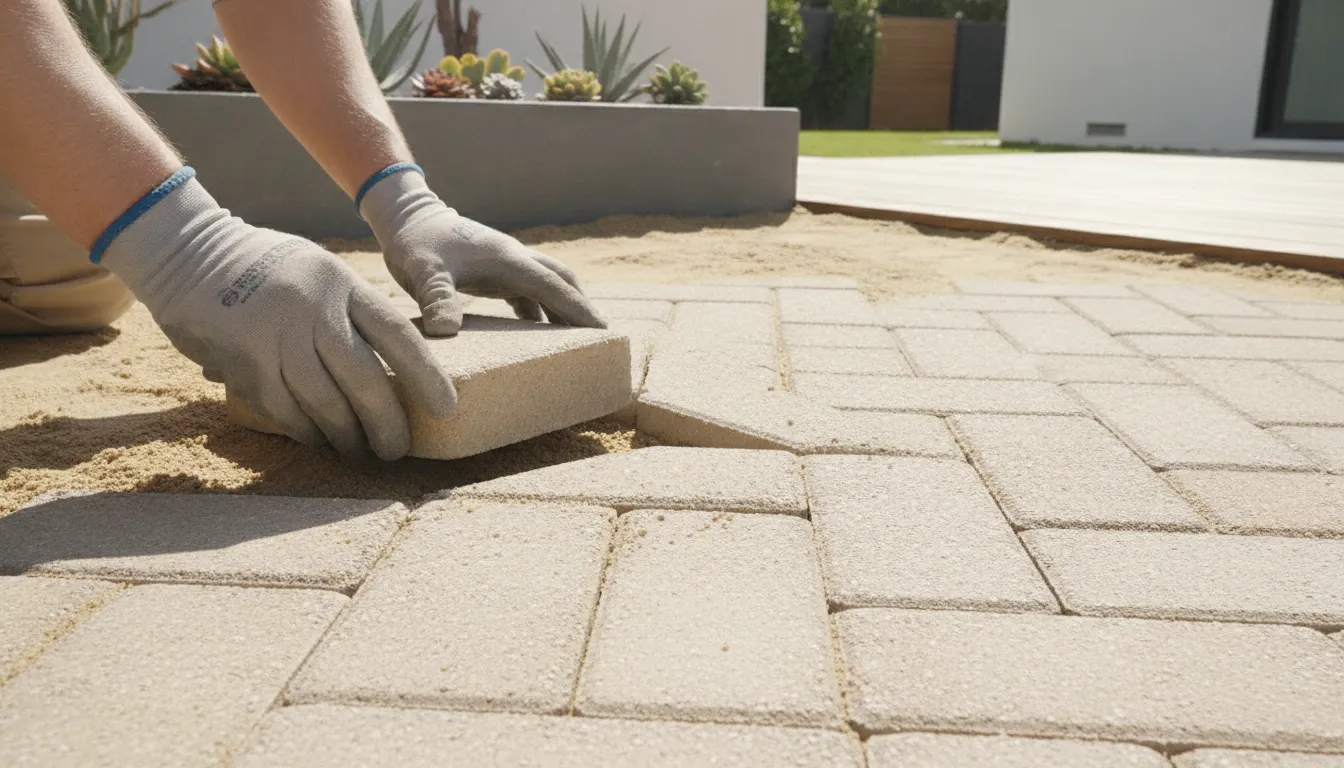
What Are the Classic Paver Patterns: Herringbone, Running Bond, and Basketweave?
The pattern you choose for your outdoor pavers defines the style of your space. Classic designs bring structure, strength, and charm to any yard. Whether you plan a new patio or want to start other backyard renovation projects, the layout matters. It affects how you use the area, how the stones wear, and how the ground handles weight.
Herringbone layouts for high-traffic zones
In a herringbone layout, the bricks or stone blocks are set at angles to each other. They form a zigzag look that mimics the bones of a fish. This layout is not just for looks. It is the strongest pattern you can choose for your yard. The locking grid keeps the stones from shifting when heavy loads move across them.
Because of this strength, herringbone is best for driveways, busy paths, and large patios. Homeowners often choose a 45-degree or 90-degree angle for the layout. In some designs, enlarged herringbone patterns use a wide mix of block shapes and sizes. This twist adds great texture. Yet, it keeps the solid bond that makes the layout so tough.
This pattern offers many benefits for your yard:
It handles heavy car traffic without shifting.
It works well on steep slopes and curves.
It creates a classic, high-end style.
The running bond pattern for clean lines
The running bond is one of the most common and classic paving patterns. To create this look, you lay long pavers side by side in straight rows. Each row is offset by half a block, which mimics the classic brickwork on a home wall. Because of this offset, the joints do not line up, which helps prevent long cracks from forming over time.
This pattern is a top option when you are building a paver walkway. The long, straight lines guide the eye and make narrow paths look wider and longer. You can run the rows along the path to draw the eye forward. Or, you can lay them across the path to slow the pace. Best of all, this layout is simple to install. It leaves you with little waste.
The basketweave design for a timeless look
The basketweave pattern is another vintage choice that brings a sense of balance and warmth. This layout uses pairs of block-shaped pavers laid next to each other. Each block pair is turned 90 degrees from the pair next to it. This turns the layout into a woven grid. These squares look like a woven basket. That is how the pattern got its name.
Basketweave is a great choice for flat, square areas like patios and seating spots. Do not use it on driveways because it cannot support cars. But for a quiet patio or a garden walk, the style has a cozy, old-world feel. You can also mix two stone colors to make the checkered grid pop. This adds a fresh look to the space.
What Modern Paver Layouts Work Best for Patios and Pool Decks?
Large-format sizes for a clean look
Southern California homes often feature sleek, clean lines that blend indoor and outdoor spaces. Large-format blocks are a common choice for these designs. These big slabs reduce the number of joint lines on a patio or pool deck. This layout makes a backyard feel much larger and more open. Using these outdoor living space design trends helps create a modern look that matches West Coast homes.
Homeowners who choose modern layouts often pick light gray, tan, or white shades. These colors reflect the hot sun and keep the ground cool under your feet. Choosing the right tone ensures your pool deck remains safe and pleasant to walk on during hot summer days.
Linear layouts and mixed turf designs
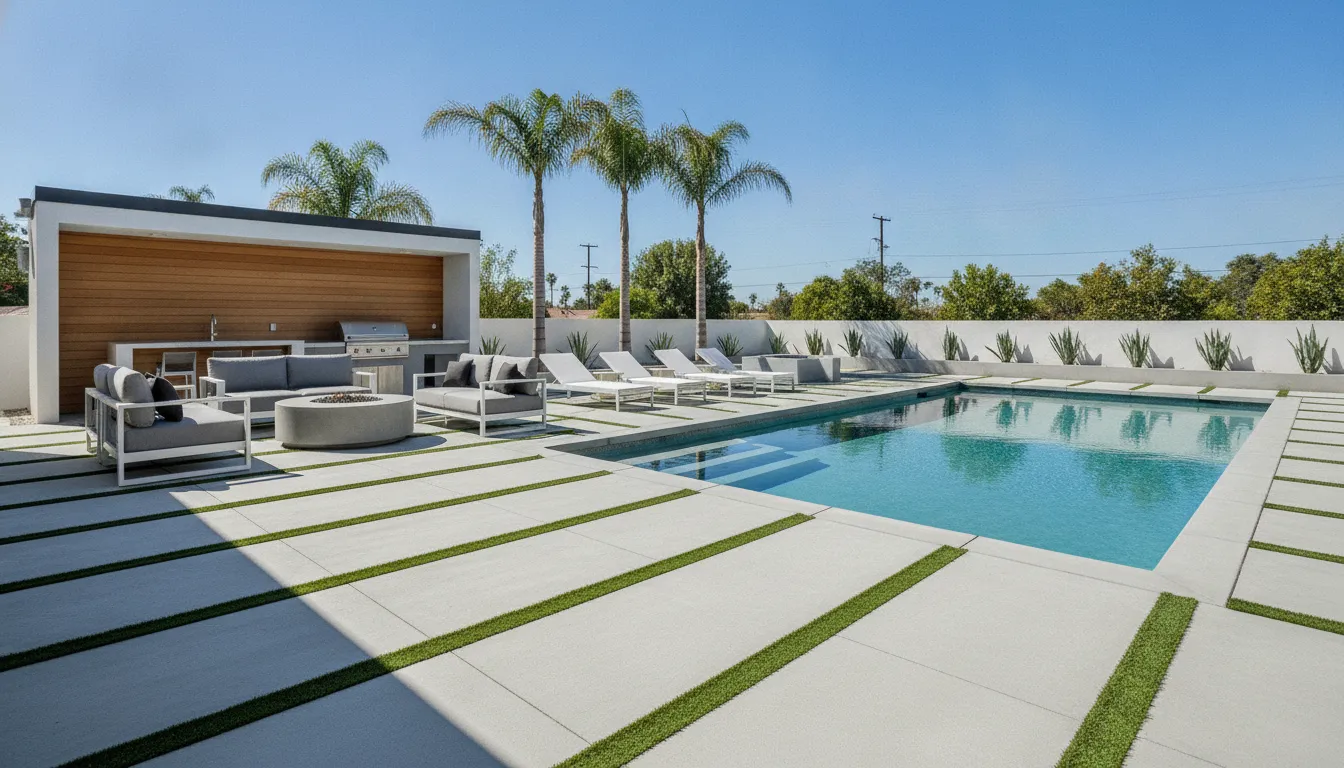
Linear layouts are another top trend for high-end backyard renovation projects in the area. In a linear layout, rectangular outdoor pavers are laid in straight rows to form long, unbroken lines. This layout draws the eye across the yard and highlights key features like pools or outdoor kitchens. Linear layouts work well on pool decks because they align with the straight edges of a pool to create a seamless border.
To add more style, many yards now use mixed-media layouts. These designs combine hard stone slabs with strips of green grass or artificial turf. The turf grows in the joints between the slabs, which creates a bold grid pattern. This green border softens the look of the stone and helps with water runoff. Because of their ability to be cut and molded to produce a desired look, these blocks offer many pattern alternatives to fit unique grid designs.
Visual patterns with modular blocks
For those who want a dynamic look, modular layouts are a great choice. These designs use blocks of three or four different sizes to build a complex layout. Instead of a simple repeating grid, the different sizes create a random, natural look. A common option is the pinwheel pattern, where a square center block is surrounded by four rectangular blocks. This layout offers high strength and fits well on busy walkways or patios.
This layout spreads weight evenly across the surface. Because the blocks lock together, they do not shift or slide over time. Homeowners can mix warm and cool tones in this layout to create a unique look. The rich texture makes your yard stand out while giving you a durable floor.
A linear look with long rows that draw the eye.
A mixed-media design with green turf borders.
A modular pattern that uses varied block shapes.
How Do You Choose the Right Paver Pattern for Your Home?
Choosing the layout for your outdoor pavers is more than a visual choice. The right design keeps your stones locked in place and stops them from shifting under weight. When you plan your yard, think about how you will use the space and what look you want to set up.
Style and Layout Considerations
Every layout has a job. Some layouts handle heavy cars, while others work best for a quiet path. Modern pavers can be cut and shaped to give you endless design alternatives for your yard. Your pattern choice will change how big your patio feels and how long it lasts.
Steps to Select Your Ideal Design
Picking the best pattern takes a clear plan. You must match the stones to your yard's shape, soil, and style. Here is a simple guide to help you make the right choice for your home.
- Assess traffic and use.
Think about how much weight your outdoor pavers will hold. If you are paving a driveway, you need a pattern that locks together tight and will not shift when heavy trucks drive over it. Patios and walkways have less traffic, which lets you use wider or more simple layouts.
- Match the pattern to your space shape.
A herringbone pattern is perfect for driveways and high-traffic spots because the interlocking angles spread out weight very well. For long, straight paths, a running bond pattern works great because it is easy to lay down and guides the eyes forward. If you have a wide, open patio, a basketweave layout adds a warm, traditional touch.
- Consider slope and drainage.
Water must run off your new pavers so it does not pool near your house. In wet areas, permeable layouts let rain water soak straight into the ground. A good layout helps guide water away from your walls and keeps your outdoor living space dry.
- Coordinate with your home's style.
Your pavers should match the look of your house. If your home has a clean, modern look, go with large pavers in a simple grid. For a classic or rustic home, a brick-style layout or a circular pattern will fit the style of your space much better.
- Confirm base and flatness.
Your pattern will only look good if the ground below it is flat. If the dirt is uneven, your pavers will sink, crack, or pop up over time. A thick, well-packed base of gravel and sand is needed to keep the pattern flat and smooth for years.
Get a permitted professional install.
To ensure your new yard layout follows all local codes, you should work with an expert. Hiring a licensed
Los Angeles hardscaping contractor
guarantees that your team gets the right permits and builds a stable, lasting layout.
Seeing Your Design in 3D
A 3D design helps you choose before work begins. A clear digital plan shows how different patterns and stone colors will look next to your home. This step removes guesswork and lets you adjust the layout before any stones are placed in the ground.
Our local building codes in Southern California are strict. A team that knows these local laws will ensure your yard is safe, flat, and drains well. Taking the time to plan your layout now will protect your investment and keep your outdoor spaces looking beautiful for a very long time.
How Should You Install and Care for Pavers in Southern California?
Prep and planning
Planning a yard project in Los Angeles or Orange County starts with a smart layout. Homeowners who want to install outdoor pavers can gain from a detailed design phase. At LevelWorks, we offer professional paver installation services and use 3D design sessions to map out every detail.
Your project manager handles the workflow from start to finish. This high level of care ensures your paving project matches your style. Our team focuses on precision hardscape work that lasts for years in the warm Southern California climate.
Southern California soil can be tough to work with. Clay soils expand and contract when the weather changes, which can crack thin concrete. Using paving stones allows the ground to flex without breaking. This makes pavers a smart choice for homes in Los Angeles and Orange County.
The step-by-step method
To build a path or patio that stays flat, you must use the right tools and steps. High-quality unit pavers are made of concrete or clay. Both types need a deep, packed base to stay level. Our skilled crew uses professional-grade products and proven steps to build a strong base. This careful approach prevents low spots and water pooling when it rains.
Dig out the soil and compact the base. Clearing soft dirt and packing down a gravel layer keeps the ground from shifting under heavy weight.
Place strong edge restraints along the borders. Plastic or metal borders hold the stones tight and stop them from spreading apart over time.
Fill the joints with sand and seal the surface. Sweeping fine sand into the gaps locks the paving units together, while a clear sealer prevents stains.
Clean and maintain the paving units on a schedule. Simple sweeping removes leaves and dirt, while mild soap washes off any tough spots.
Follow local building codes and drainage rules. Many cities in Southern California need permits for paving projects to protect local water.
Sealing your pavers is a vital step for homes in the sun. The strong Southern California sun can fade stone colors over time. A good seal blocks UV rays and keeps your yard looking bright and clean for a long time.
Walkway design and planning
If you are thinking about building a paver walkway on your own, these steps will help you get started. But large areas like driveways or pool decks need heavy tools to ensure a flat, stable finish. Working with an expert team makes the process simple and stress-free. We handle everything from the first design sketch to the final cleanup. Our project managers ensure your new outdoor living space is built to code and matches your style.
Frequently Asked Questions
Is it cheaper to have concrete or pavers?
Standard concrete usually costs less upfront to install than pavers. However, concrete often cracks over time in the warm climate of Southern California, which leads to costly repairs. In contrast, outdoor pavers can flex with minor soil movement. This flexibility prevents cracks and saves you money on repairs over the long term.
Can I lay pavers directly on dirt?
No, you should not lay pavers directly on dirt. Without a proper base, the stones will shift, sink, and become uneven very quickly. A long-lasting installation needs a dug-out area filled with compacted gravel and sand. This strong base provides drainage and keeps the ground flat. For a lasting driveway or patio, you should use professional paver installation services to prep the site.
How much does a 20x20 paver patio cost?
The price of a 20x20 paver patio depends on the paver type you choose and the site prep. According to the University of Idaho, unit pavers can be made of clay brick or high-strength concrete, which have different prices. To get an accurate price for your backyard, you should get an exact project estimate. A skilled team can draft a design plan that matches your goals and details all costs.
What are the best outdoor pavers for Southern California?
The best outdoor pavers for Southern California are concrete and porcelain because they stand up well to high heat. Porcelain pavers provide great durability and a wide variety of style looks. High-strength concrete units also resist wear from foot traffic on pool decks. Both options keep your yard looking great for decades with very little care.
Ready to Design Your Outdoor Paver Space?
Waiting to start your outdoor hardscape project can lead to muddy soil, rough walkways, and low curb appeal for your Southern California home. Setting up your custom design now means your new patio or pool deck will be ready to enjoy before warm weather arrives. Our expert design-build team handles the whole process from 3D drawings to final building while meeting all California building codes and local permit rules.
Ready to get started on your home? Request a paver design consultation with LevelWorks to plan your next project with a dedicated project manager today. You can also call our Southern California office at (855) 202-2015 to speak with our team about your custom outdoor living space needs.