Pavers vs Poured Concrete Patio: Which Is Best for Your LA Home?

Updated: 5 days ago
A beautiful backyard patio is the foundation of any great Southern California outdoor living space. The pavers vs poured concrete patio decision affects your home's value, curb appeal, and daily enjoyment for decades. Schedule a free consultation with our design-build team to explore which option fits your property and budget best.
When comparing a pavers vs poured concrete patio, the key difference is structural: interlocking pavers distribute weight across individual units and flex with shifting soil. Which prevents the cracking common in solid concrete slabs. Poured concrete is cheaper to install upfront, but it cracks easily under soil movement and heat, and repairing a slab often requires a full replacement. Pavers demand less maintenance, allow simple individual piece replacement, and boost resale value. For most LA homeowners who want a durable, stylish, and long-lasting patio, pavers deliver better long-term value.
Selecting the right material is the most important decision when planning your new outdoor living space. The sections below explore appearance, durability, cost, maintenance, and site considerations so you can choose with confidence.
Appearance and Design Options: How Pavers and Concrete Compare
Pavers offer vastly more design variety with multiple shapes, colors, and laying patterns, while concrete slabs deliver a clean. Minimalist look that can be stamped or stained but lacks the depth of individual stone units.
When choosing between a pavers vs poured concrete patio, design flexibility is often the first detail homeowners look at. Your choice will shape how your outdoor living space blends with your house.
Aesthetic Versatility of Interlocking Pavers
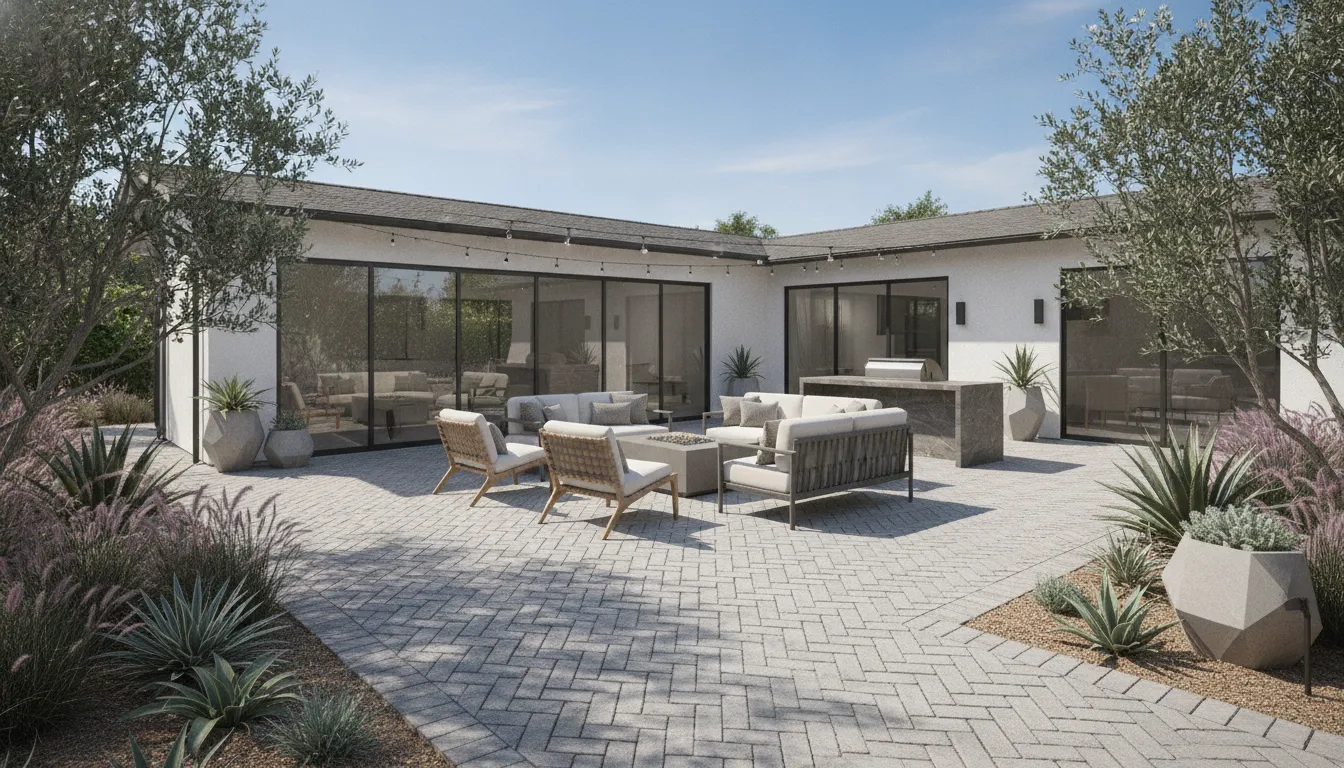
Paver systems are made of individual interlocking units that offer rich textures and classic styles. You can buy these manufactured concrete blocks in many shapes, sizes, and colors. This variety lets you build unique layouts, like herringbone or basketweave patterns. These styles fit well with both Spanish colonial and mid-century modern home designs in the Los Angeles area. If you want a tailored look, exploring custom paver patio designs can show you how to mix stones to match your specific taste.
Styling Options for Solid Concrete Slabs
A standard concrete slab has a clean, simple look that works well for modern homes. Concrete slabs can last for decades when properly maintained, making them a durable option. You do not have to settle for basic gray surfaces. Contractors can apply stains to concrete to give it a warm, rich tone, or they can stamp patterns into the wet surface. Stamped concrete can mimic the look of natural stone or wood planks. Still, stamped concrete lacks the genuine depth and seam detail that individual stone blocks provide.
Matching Your Home Architecture
The right patio material should highlight the architectural design of your house. Pavers can fit almost any home style because you can arrange them in curves and custom borders. Stamped or stained concrete works best for geometric, clean lines. Individual stone blocks look like hand-laid masonry, while a concrete slab feels like a single, solid block. Your choice depends on whether you want a textured, classic paved surface or a smooth, modern slab.
Durability and Longevity: Which Patio Material Lasts Longer?
Paver patios typically last 25 to 50 years thanks to their flexible interlocking design. While poured concrete slabs last 15 to 25 years and are prone to cracking from soil movement and temperature changes.
When you build a new outdoor living space, you want your investment to last. Choosing between pavers and concrete requires looking at how each option holds up over time. Structural design plays a major role in long-term performance.
How Shifting Soil Causes Concrete Cracks
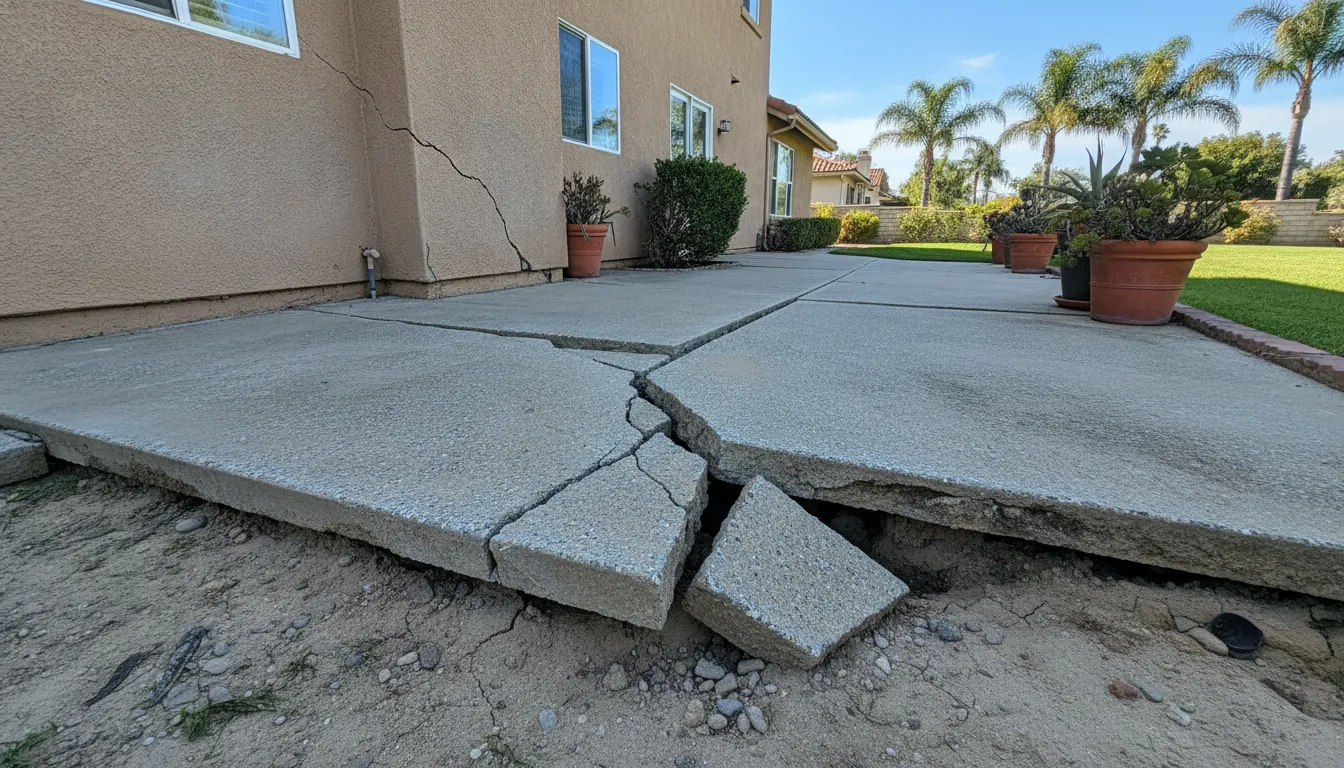
Poured concrete is a monolithic slab, which means it is one single, rigid sheet of stone. This design makes it highly vulnerable to movement. As the ground shifts or settles, the rigid slab cannot flex to absorb the movement, which often causes the concrete to crack. Under guidelines for durable pavement design, a single solid slab has no way to relieve this natural tension. Even with control joints, random cracks frequently develop across the surface over time, leading to early wear and costly repairs.
Why Interlocking Paver Systems Flex Without Breaking
In contrast to a solid slab, paver systems consist of individual interlocking units set on a bed of sand and gravel. Because the pieces are separate, they form a flexible network that can rise and fall with the soil. As the ground shifts, the individual units flex to accommodate the movement instead of snapping. This interlocking design makes permeable interlocking concrete pavement highly resilient to shifting soils. By spreading pressure across many small units, the patio stays intact and retains its shape for years.
How the Southern California Climate Impacts Lifespan
In many parts of the country, freeze-thaw cycles are the main cause of patio damage, but the mild weather in Greater Los Angeles eliminates this issue. Without freezing winters, local patios do not face frost heaves, but they still must deal with soil settlement and dry spells. A solid concrete patio can last for 15 to 25 years before it needs major repairs or replacement. On the other hand, a well-built paver patio can easily last 25 to 50 years. The flexible structure prevents the structural stress that shortens the life of a standard concrete slab.
Cost Comparison: Upfront Investment vs. Long-Term Value
Poured concrete costs less upfront, but pavers deliver significantly better long-term value due to lower maintenance costs, easier repairs, and higher resale value. A cracked concrete slab often requires full replacement, while damaged pavers are swapped individually.
When comparing a pavers vs poured concrete patio, understanding the full financial picture matters more than the initial price tag.
- Upfront cost:
Poured concrete slabs typically cost less to install because they require less preparation work and fewer labor hours. This lower starting price can fit tighter budgets.
- Long-term value:
Pavers can last 25 to 50 years with minimal maintenance. Their flexible design prevents cracking, which eliminates the need for costly full replacements that concrete often requires.
- Repair costs:
Fixing a paver patio means lifting and replacing individual stones, which costs a fraction of tearing out and repouring a concrete slab.
- Resale value:
A well-built paver patio boosts curb appeal and home resale value. Buyers recognize that pavers will last for decades without major work.
To make sure your budget fits your goals, we offer consultations and free detailed project quotes. Any estimate we provide remains valid for a full six months, which gives you plenty of time to plan your home improvement project.
Ready to get started? Request a free estimate for your patio project today.
Maintenance and Repairability: Pavers vs. Poured Concrete
Pavers require only occasional joint sand top-ups and allow single-stone replacement when damaged. Concrete needs periodic resealing to prevent stains, and cracks typically require patching or full slab replacement that leaves visible scars.
Both paver and concrete patios need some care, but their upkeep tasks and repair processes differ significantly.
Upkeep and Care Demands
Poured concrete is a single, large slab that soaks up liquids easily, which can leave deep stains. Because of this risk, concrete needs a fresh coat of sealant every few years to block oil, dirt, and grease. If you skip this step, the surface can look dull and stained very quickly.
A paver patio has a different design. Instead of a solid block, it uses many small pieces. The main upkeep task for pavers is maintaining the joint sand. Wind and rain can wash this sand away over time. So you must add new sand to the joints every few years to keep the blocks locked in place. These joint spaces also allow water to seep through the system, which aids in stormwater management.
How to Handle Patio Repairs
When a poured concrete slab breaks or cracks, fixing it is a big challenge. Patching a crack is possible, but the new wet concrete will not match the old, dry patio. This leaves a permanent dark scar across your yard. Often, the only way to get a clean look is to tear out the whole slab and pour it again, which is costly and slow.
Pavers are much simpler to repair. If a single block gets stained or chipped, you do not have to touch the rest of the patio. You can pull out that one damaged piece, clean the space, and put a new paver in its place. This quick swap leaves no marks or scars, keeping your custom paver patio designs looking new for years. This easy repair process is a key reason many local families prefer pavers for long-term value.
Drainage and Site Preparation for Los Angeles Patios
Permeable paver systems allow water to drain through their joints into the soil below, which helps meet strict LA stormwater codes. Concrete slabs create runoff and require additional drainage planning.
A beautiful backyard starts with what lies beneath the surface. When you weigh a pavers vs poured concrete patio, site preparation and water management should guide your choice. Proper grading and base installation prevent future shifting, especially in areas with expansive soils or strict local rules.
How Shifting Soils Affect Your Sub-Base
In Southern California, soils often expand and shrink with moisture changes. A solid sub-base acts as a shock absorber for your patio. Poured concrete is a monolithic slab, which means soil movements can cause the entire surface to crack over time. In contrast, interlocking concrete pavement consists of individual units with flexible joints. This layout allows the system to flex and self-adjust to soil movement without cracking.
Managing Stormwater and Local Drainage Codes
Los Angeles has strict rules for managing rainwater runoff on residential properties. Homeowners are often required to keep stormwater on-site rather than letting it flood public storm drains. Permeable interlocking concrete pavement, or PICP, is an excellent way to comply with these local codes. These systems allow rain to seep directly through the joints into the underlying soil and gravel base. By letting water soak into the ground, permeable systems filter out runoff pollutants and reduce the need for extra drainage pipes.
Handling Permitting and Code Compliance
Building a new patio often requires permits and plans that meet city standards. LevelWorks handles the entire process, from initial design and grading plans to securing local permits. If you want to explore the best hardscape layout for your property, our team can help. You can learn more about our professional concrete and paver services or schedule a free design consultation to start your project. We also design permeable solutions that help protect local waterways and keep your home compliant with environmental rules.
Key Differences at a Glance: Pavers vs. Poured Concrete
This comparison table summarizes the most important differences between pavers and poured concrete across design, durability, cost, maintenance, repair, and drainage.
Choosing the right hardscape material is a vital step in planning your backyard renovation. When comparing a pavers vs poured concrete patio, homeowners must weigh several factors. Understanding these key differences helps you select the best fit for your home.
Feature | Paver Patio | Poured Concrete Patio |
Design Options | High variety of colors, shapes, and patterns | Basic grey or limited stamped options |
Durability | Flexible interlocking units resist cracking | Rigid slab that can crack when ground shifts |
Lifespan | 25 to 50 years | 15 to 25 years |
Upfront Cost | Higher initial investment | Lower initial installation cost |
Maintenance | Occasional joint sand top-ups | Periodic sealing to prevent deep stains |
Repairability | Easy to lift and replace single units | Requires patching or full section removal |
Drainage | Permeable joints allow water to seep through | Non-permeable surface creates runoff |
Best For | Long-term durability and custom design | Basic utility on a strict initial budget |
How to Choose Between Pavers and Poured Concrete for Your Patio
The best choice depends on your budget, soil conditions, design preferences, and how long you plan to stay in your home. Pavers offer superior longevity and design flexibility. Concrete works for tighter budgets and minimalist aesthetics.
Deciding on the right hardscape material is a vital step in planning your outdoor living space. Both options have unique benefits, and the best pick depends on your personal taste, budget, and site needs. You do not have to choose a single winner. Instead, you can look at how each option fits your goals. An expert general contractor can help you weigh these points to find the right fit for your home.
Weigh Your Budget and Long-Term Value
Upfront cost is often a main point of comparison for homeowners. Poured concrete slabs usually cost less to install at first. But interlocking units can offer higher long-term value because they are simple to repair. If a concrete slab cracks, fixing it often leaves a noticeable patch or requires a full replacement. With interlocking systems, you can lift and swap out single units if they get stained or damaged, which keeps your upkeep costs low over time.
Assess Soil Conditions and Drainage Needs
Your property's soil type and water drainage should also guide your choice. Permeable pavements allow rain to seep through the surface into the soil below, which assists with local stormwater management. Paver joints let water pass through, which is highly helpful in areas with strict local drainage rules. If your yard has clay soil that swells and shrinks, flexible interlocking systems can shift without cracking. If you choose concrete, you must plan for strategic joints to control cracks as the ground moves.
Get Expert Design and Planning Support
Working with a full-service team makes planning your backyard renovation simple and stress-free. Experienced builders handle everything from city permits to final cleanup. When hiring a patio contractor, look for a team that offers a dedicated project manager to guide the work. A professional consultation with 3D design support lets you see both options in your yard before you make your final choice. This help ensures your new patio matches your home and meets your needs for years to come.
Talk to a project manager today. Schedule your free consultation and design discussion.
Frequently Asked Questions
What is the main difference between pavers and poured concrete for a patio?
Paver systems consist of individual interlocking units, whereas poured concrete forms a single solid slab. This key structural difference means concrete is prone to cracking as soil shifts, while pavers can flex to accommodate ground movement without breaking.
Are paver patios easier to repair than concrete slabs?
Yes, repairing pavers is much simpler than fixing concrete. If a section gets damaged or stained, you can lift and replace those exact individual units without leaving any scars. Fixing a poured concrete slab requires patching or replacing the entire area, which often leaves visible, uneven seams.
Which patio material is better for Los Angeles drainage codes?
Pavers are generally better for meeting local drainage rules. Because water can drain through the joints, paver systems act as permeable surfaces. Permeable pavements help manage stormwater on-site, which aligns with Los Angeles County requirements for keeping runoff on residential properties.
Can stamped concrete look as good as pavers?
Stamped concrete can mimic stone or wood patterns, but it lacks the genuine depth, texture, and seam detail that individual paver units provide. Over time, stamped patterns also fade and wear unevenly, while pavers maintain their color and shape throughout their lifespan.
Do pavers add value to a home in Los Angeles?
Yes, a professionally installed paver patio typically adds more resale value than a concrete slab. Buyers recognize the durability, low maintenance, and enhanced curb appeal that paver hardscapes offer. Real estate experts often cite paver patios as a high-ROI home improvement for Southern California properties.
How long does it take to install a paver patio compared to concrete?
Paver installation usually takes longer because it requires a multi-layer base of gravel and sand, followed by manual placement of each unit. A concrete slab can be poured and finished in fewer days, but the curing process adds time before the surface is ready for use. LevelWorks handles scheduling and project management to keep timelines clear and predictable.
The Final Verdict: Which Patio Material Should You Choose?
When comparing a pavers vs poured concrete patio, both materials have their place. Poured concrete works well for strict budgets and minimalist designs. Pavers excel in durability, design variety, easy repairs, and long-term value. For most Los Angeles homeowners who want an outdoor living space that looks beautiful and holds up for decades, interlocking pavers are the smarter investment.
Contact LevelWorks Construct & Renovate at 424-330-4677 to schedule your free consultation and design discussion. Our team brings over a decade of local experience and a dedicated project manager to every patio project.