Permeable Pavers Los Angeles: Complete Homeowner's Guide

Updated: 5 days ago
Pooling water and cracked concrete are frustrating driveway problems for local homeowners. Intense southern California rainstorms often leave standing puddles that damage standard asphalt and concrete surfaces over time. Upgrading your home with professional permeable pavers los angeles solves these issues by letting rainwater flow naturally through your driveway or patio instead of flooding your yard.
Schedule your free consultation for permeable pavers today. Call 424-330-4677 to discuss your project with a design-build expert.
Before you begin planning your home remodeling project, it is helpful to understand how these advanced paving systems function and how they differ from standard pavers. This comprehensive guide walks you through the core design, local regulations, and long-term care of these durable surfaces. Let us start by looking directly at how permeable pavers work and how their clever structure keeps your property dry and protected.
How Do Permeable Pavers Work?
Using permeable pavers los angeles is a highly effective way for local homeowners to manage stormwater and prevent standing water. According to the EPA, these interlocking paving systems let rainfall seep through the surface into underlying soil and gravel instead of running off into storm drains. Naturally filtering pollutants and reducing erosion.
Permeable pavers are special paving units that allow rainwater to seep through the surface. They do not let water pool or run off into local storm drains. Instead, water passes down through the joints and into the ground below. This process helps recharge our local water tables and reduces the volume of runoff in our streets.
How the Drainage System Works
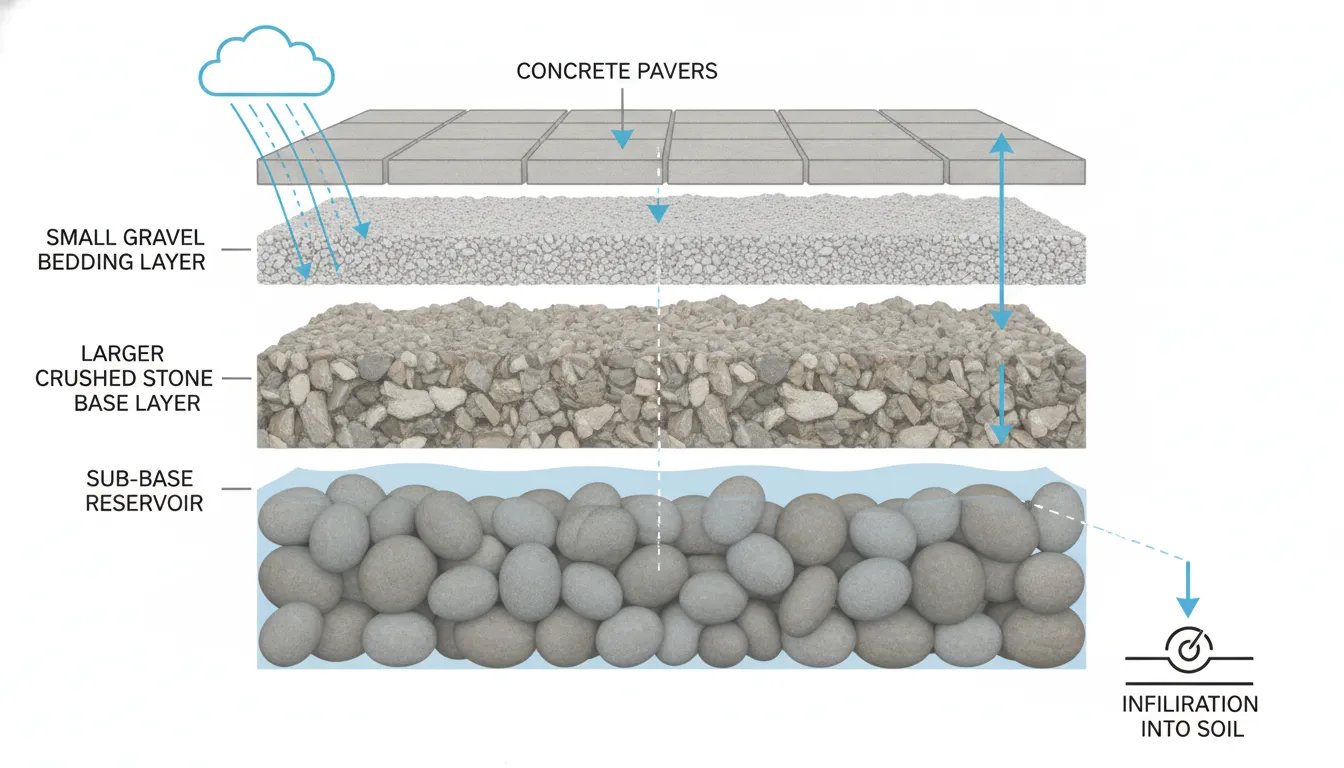
A standard driveway or patio acts as a solid shield that blocks water. Permeable interlocking concrete pavers work in a very different way. According to the U.S. Environmental Protection Agency (EPA), these systems consist of solid concrete blocks with small gaps between them. These open joints are filled with highly permeable, small-sized stones.
When rain falls, it flows through these open joints instead of sitting on top. The water enters a multi-layered base of crushed stone aggregate. This base consists of a thin bedding layer on top of a thicker open-graded stone base. The stones in this sub-base are sized to leave open air pockets. These pockets temporarily hold and filter the stormwater before it sinks into the soil.
Three Common Types of Permeable Paving
Homeowners can choose from several main styles of permeable paving. Each offers unique advantages depending on your property and design goals:
- Permeable interlocking concrete pavers (PICP):
The most popular choice. These are strong, pre-cast concrete blocks available in many colors and shapes. Their joints are filled with tiny stones to let water drain fast.
- Pervious concrete or porous asphalt:
This material does not use joints. The mix itself eliminates fine sand, leaving tiny open pores throughout the entire paved surface. Rain flows right through the slab into the gravel base below.
- Plastic grid systems:
An open-cell plastic mesh grid placed over a stone base, filled with gravel or turf grass. An excellent choice for green driveways, paths, and parking areas where you want a natural look.
Crushed Stone Base Specifications
The secret to a long-lasting permeable system is the engineered base beneath the surface. This base must support the weight of vehicles while storing large volumes of water. The installation requires specific stone sizes to work right.
- Bedding layer (2 inches):
Small washed stone, about one-quarter inch in size, directly beneath the pavers.
- Base layer (4 inches):
Larger crushed stone, typically one-half inch to one inch, placed below the bedding layer.
- Sub-base (up to 12 inches):
Large, clean three-inch stones creating the main water storage reservoir.
All of these stones must be washed clean of any dirt or sand so the system does not clog. Homeowners who want to improve their property can explore professional permeable paver installation to see how these systems fit their land.
What Are the Benefits of Permeable Pavers for Los Angeles Homes?
Homeowners in Southern California face a unique set of weather patterns, from long, dry summers to sudden, intense winter rainstorms. Standard concrete driveways and patios act as solid barriers, sending every drop of rainwater straight into city storm drains. This rapid runoff can overwhelm local drainage systems, cause street flooding, and carry pollutants from your property into nearby waterways. Choosing permeable pavers in Los Angeles offers a modern solution that protects your property while supporting the local environment.
Feature | Permeable Pavers | Traditional Concrete / Asphalt |
Water management | Rainwater drains through joints into soil below | Water runs off into streets and storm drains |
Flood prevention | On-site infiltration reduces runoff and pooling | Requires additional drainage infrastructure |
Pollution control | Filters oil, grease, and contaminants naturally | Carries pollutants directly into waterways |
Lifespan | 50+ years with individual unit replacement | 10 to 20 years before cracking and repairs needed |
LA code compliance | Approved for driveways and parking areas | Standard, no special approvals needed |
Maintenance | Regular sweeping, occasional power washing | Sealing, crack repair, resurfacing |
Reduce Runoff and Protect Against Flooding
The primary benefit of permeable pavers is their ability to manage stormwater right where it falls. Instead of pooling on the surface or running off into the street, rainwater seeps down through the joints between the pavers and into the crushed stone base below. The base layer acts as a temporary reservoir, holding the water and allowing it to slowly infiltrate into the natural soil. This process significantly reduces the volume and speed of runoff leaving your property, which is especially valuable during Los Angeles heavy winter storms.
Filter Pollutants and Improve Water Quality
Every time rain runs off a standard driveway or patio, it picks up oil, grease. Fertilizers, and other contaminants along the way and carries them into the storm drain system. From there, these pollutants often flow into local creeks, rivers, and the ocean. Permeable pavers help break this cycle. As water passes through the stone-filled joints and aggregate layers, the natural filtration process removes many of these pollutants before they reach the groundwater. For homeowners near the coast or in watershed-sensitive areas, this filtration benefit is a meaningful way to reduce your property's environmental footprint.
Reduce Drainage Infrastructure Costs
When you build a traditional concrete or asphalt driveway, you often need to install additional drainage features to manage runoff. Catch basins, underground pipes, French drains, and retention systems can add thousands of dollars to your project budget. Permeable pavers can reduce or even eliminate the need for these costly extras. The savings come from both materials and labor, since fewer underground components need to be designed, excavated, and installed.
Boost Property Value and Curb Appeal
Beyond the environmental and practical benefits, permeable pavers offer outstanding visual appeal. They are available in a wide variety of shapes, colors, and laying patterns, which means you can create a custom look that complements your homes architecture. Whether you prefer the clean lines of modern concrete pavers or the timeless feel of classic stone, permeable systems deliver a high-end finish that elevates your entire property.
Are Permeable Pavers Allowed in Los Angeles?
Planning a new hardscape project in Southern California means working with local building rules. The City of Los Angeles has clear building codes to manage rainwater and runoff. Understanding these rules is the first step toward a successful home upgrade. Fortunately, local codes make it simple to choose sustainable materials for your home driveways, garden paths, and outdoor living spaces.
What the City of Los Angeles Allows
Local building codes encourage green residential choices. The City of Los Angeles permits alternative paving materials for home projects. Under Los Angeles Planning guidelines, homeowners can use permeable pavers for parking areas, automobile storage zones, and residential driveways. Choosing these systems helps lower the strain on the city storm drain system during heavy winter rains.
Thickness and Installation Rules
To ensure your new stones last for decades, the city enforces strict technical standards. Permeable interlocking concrete pavers must have a minimum thickness of 80mm, which is about 3.14 inches. The city also requires that you install all paving products and underlying drainage material per manufacturer specifications. Contractors must compact the sub-grade soils underneath the stone base as required by the product specs. If your hardscape design includes live green plants within the paving joints, the irrigation system cannot use potable water except during the initial plant establishment period.
Site Assessment and Permit Steps
Before any stone is laid, a professional site assessment is needed to check your soil type and yard slope. Clay soils, which are very common in parts of Greater Los Angeles, drain water slowly and need deeper gravel bases to hold water. A typical permit review for a residential driveway or backyard hardscape ensures the plan prevents ponding and handles water runoff correctly. City permit fees vary based on the project size, location, and scope. The city review process can take several weeks as local planners check the drainage plans and soil profiles to ensure everything is safe and dry.

How LevelWorks Manages the Process
Dealing with city hall can be slow, confusing, and stressful for busy homeowners. LevelWorks handles the entire permit process from start to finish so you do not have to worry about the details. Our team drafts the layout plans, calculates the drainage needs, and submits all required paperwork to the local building department. We make sure every detail matches city code, from the 80mm paver thickness to the compacted sub-grade soils. This full-service management saves you time and ensures your new driveway or patio is completely legal, safe, and built to last.
What Does the Permeable Paver Installation Process Look Like?
Installing permeable pavers is a highly technical task that requires careful planning and exact execution. When you work with a professional team, they follow a strict series of steps to ensure your new surface drains water perfectly and lasts for decades. Below is the step-by-step process used during a professional installation in Southern California.
- Site assessment and planning:
Our team tests the soil to see how fast it absorbs water. Different soil types require different base depths. We also check the slope of your yard and handle all local building permits to ensure full compliance with municipal codes.
- Excavation and soil prep:
We dig out the area to the proper depth. For a driveway, this is usually between 10 and 18 inches deep. The sub-grade soil must be flat and free of organic debris like roots or grass. According to municipal guidelines, soils must be compacted as required per the product specifications to support heavy vehicle loads.
- Laying the crushed stone base:
We use clean, washed crushed stone aggregate to build a thick, stable foundation that detains stormwater. We spread this coarse stone in layers and compact each lift with heavy machinery.
- Placing the bedding layer:
On top of the thick base, we lay a thinner bedding layer of smaller washed stone, such as No. 8 aggregate. It provides a smooth, flat bed for the blocks. An uneven bedding layer will cause the surface blocks to sit at different heights.
- Laying the 80mm pavers:
We lay the concrete blocks. For driveways and parking areas in Southern California, local building codes mandate that permeable interlocking concrete pavers must have a minimum thickness of 80mm. Laying the blocks requires skilled hands to keep the joint lines straight and neat.
- Installing edge restraints:
To keep the blocks from shifting sideways, we install durable edge restraints. These are solid concrete borders or heavy-duty plastic restraints pinned into the ground with steel spikes.
- Filling the joints and final compaction:
We sweep small stone chips into the joint openings. These joints are filled with clean, small-sized aggregate rather than sand or grout to keep the pathways open for water flow. We then run a heavy mechanical plate compactor over the surface to lock everything into place.
How Do You Maintain Permeable Pavers?
Some homeowners worry that choosing permeable pavers in Los Angeles means signing up for hours of extra yard work. But the truth is that these systems are easy to keep in top shape. In our mild local climate, you will not have to deal with hard winter freezes or heavy snow that can shift or crack pavement. A simple routine is all it takes to keep your hardscape looking clean and draining water well for decades.
Simple Habits for Clear Joints
The main task is keeping the small stone joints between the stones free of dirt, leaves, and weeds. When debris blocks these gaps, water cannot drain into the ground. Regular sweeping with a stiff brush or using a leaf blower will prevent organic matter from turning into compost. You should aim to clear leaves and grass clippings off your driveways or patios once a week.
Once a year, you can use a garden hose or a low-pressure power washer to clean the surface. Be careful not to point the water spray straight down into the joints, as this can wash out the small stones that fill the gaps. If you notice weeds starting to grow, pull them by hand when they are small before their roots can spread deep into the base layer.
Topping Off Your Stone Aggregate
Over time, heavy rain and wind can slowly remove the small, crushed stone aggregate from the joints. This is normal and easy to fix. If the stone level drops more than half an inch below the top of the pavers, you just need to add more. You can buy the matching small stone chips, pour them over the surface, and sweep them into the gaps until they are level again.
According to the U.S. Environmental Protection Agency, keeping these joints filled with clean, small-sized stones is key to letting rain filter down into the soil. Well-filled joints also stop the pavers from moving when you drive or walk on them.
Caring for Your Pavers After Major Storms
Southern California can get dry spells followed by sudden, heavy winter downpours. After a major rainstorm, take a quick walk around your yard. Check for any areas where water is still puddling on the surface. If standing water remains longer than three hours after the rain stops, the joints in that spot may be blocked. A quick check and sweep of the affected area usually solves the problem right away. These simple habits keep your system working at its peak.
Frequently Asked Questions
How much do permeable pavers cost in Los Angeles?
Costs depend on the size of the area, the type of pavers selected, site preparation needs, and the complexity of the base layer. A full-service design-build contractor like LevelWorks provides detailed, itemized quotes after a site assessment. Estimates are valid for six months, giving you time to plan your budget. The long-term savings from reduced drainage needs and lower maintenance costs often offset the initial investment over time.
Do permeable pavers work with clay soil?
Yes, but clay soils drain much slower than sandy soils. So the crushed stone base must be deeper to hold more water while it slowly filters into the ground. A proper site assessment by a professional contractor determines the exact base depth required for your property's specific soil conditions. Most Los Angeles area clay soils can be managed effectively with an engineered deeper aggregate base.
Can permeable pavers handle heavy vehicle traffic?
Yes, when installed correctly. Permeable interlocking concrete pavers with 80mm minimum thickness are designed to support vehicle loads including cars, SUVs, and light trucks. The key is proper sub-grade compaction and an adequate crushed stone base thickness. Driveways built to city specifications handle daily vehicle traffic without shifting or settling.
How long do permeable pavers last?
Properly installed permeable paving systems typically last 50 years or more. Unlike asphalt that needs resurfacing every 10 to 20 years or concrete that cracks and requires patching. Individual paver units can be replaced if damaged without disturbing the rest of the surface. This modular design makes long-term maintenance both simple and cost-effective.
Do I need a permit to install permeable pavers in Los Angeles?
Most residential driveway and major hardscaping projects in Southern California require local permits to ensure they meet municipal building and safety standards. The city requires all paving products and drainage materials be installed per manufacturer specifications. LevelWorks handles the entire permit process from application to final approval, ensuring your project is fully compliant with municipal codes.
Ready to Upgrade Your Home With Permeable Pavers?
Permeable pavers offer a smart, durable, and eco-friendly solution for Los Angeles homeowners looking to improve their driveways, patios, and walkways. From reducing stormwater runoff and filtering pollutants to boosting curb appeal and complying with local building codes, these systems deliver lasting value for your property. At LevelWorks, our design-build team handles every step of the process from site assessment and permitting through installation and final inspection.
Call us today at 424-330-4677 to schedule your free consultation and design discussion. Let us help you create a beautiful, functional outdoor space that stands up to Southern California