Brick Patio Pavers: Patterns, Colors, and Care Guide

Updated: 5 days ago
A well-designed patio can turn a Southern California backyard into a more useful part of the home, but the surface needs to do more than look attractive. Pattern, color, drainage, and routine care all affect how the space feels and performs under strong sun and year-round outdoor use.
Brick patio pavers offer a warm, structured foundation for outdoor dining, seating, and entertaining. The right pattern can define the style, while climate-aware installation, stable joints, and regular maintenance help the patio stay attractive through Southern California's dry conditions.
For homeowners planning a new hardscape, the design process starts with how the patio will be used and how its materials will relate to the home. LevelWorks brings more than 10 years of local experience to design-build projects and is licensed, bonded, and insured in California. With that foundation in mind, the next decision is the visual rhythm underfoot, from formal lines to more detailed repeating layouts.
Request a brick patio paver consultation or call (855) 202-2015 to talk through your outdoor space with our team.
What Are the Best Brick Patio Paver Patterns?
The best brick patio paver pattern depends on the patio's size, shape, furniture plan, and the feeling you want to create. Herringbone adds movement and visual strength, running bond keeps the space calm and open, basket weave brings traditional character, and pinwheel creates a distinctive focal point. For many Southern California patios, warm brick tones paired with a clear, well-scaled pattern make the outdoor living area feel intentional without overwhelming the home.
Pattern is more than a decorative choice. The direction of the lines can make a narrow patio seem longer, while a compact repeating motif can make a broad space feel more gathered and welcoming. Before choosing a layout, consider where people will walk, where chairs will sit, and whether the patio connects to a walkway or other hardscape.
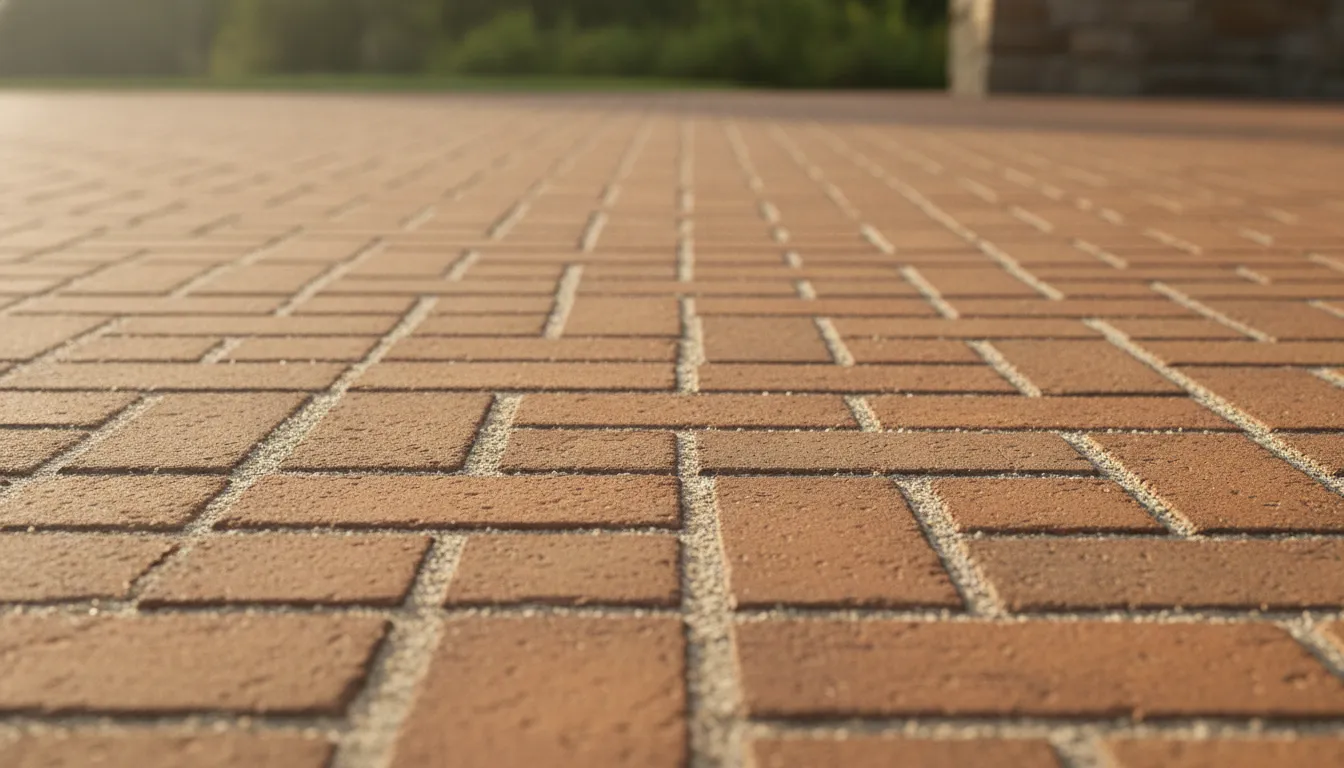
- Herringbone:
Bricks meet at alternating angles to create a zigzag effect. The pattern has strong visual movement and works well when you want the patio to feel designed rather than purely functional. Its interlocking layout also suits active areas with frequent foot traffic. A standard 45-degree layout can emphasize the width of a patio, while a 90-degree layout can guide the eye along its length.
- Running bond:
Each row is offset from the one before it, creating the familiar look of a brick wall. This is one of the cleanest options for a relaxed patio because the lines are easy to follow and do not compete with furniture, planting, or a view. Run the rows across a narrow space to make it feel wider, or lengthwise to reinforce its direction.
- Basket weave:
Small groups of bricks alternate between horizontal and vertical pairs, forming a woven appearance. Basket weave fits traditional, cottage, and Spanish-influenced homes particularly well. It gives a larger patio a comfortable, established character, although the repeated blocks can feel busy in a very small area.
- Pinwheel:
Bricks rotate around a central square or focal point, producing a pattern that naturally draws attention. It can define a dining area, fire feature, or seating zone inside a larger patio. Pinwheel layouts require careful planning and precise cuts, so the finished result depends heavily on accurate base preparation and installation.
Pattern | Best Look | Best Use | Installation |
Herringbone | Designed and dynamic | Active dining and high-traffic areas | Requires precise 45 or 90 degree layout |
Running bond | Calm and clean | Relaxed patios beside furniture and views | Simple offset rows, easy to follow |
Basket weave | Traditional, cottage, Spanish | Larger patios with established character | Alternating horizontal and vertical pairs |
Pinwheel | Distinctive focal point | Defining dining, fire, or seating zones | Careful planning and precise cuts |
In Southern California, these patterns can support outdoor dining and sitting areas that extend the home's usable living space. Permeable layouts or appropriately spaced joints may also help rainwater move into the soil instead of concentrating runoff, depending on the site, base design, and local requirements. The pattern should work with those practical details, not hide them.
If you are comparing layouts before construction, review our guide to installing your own paver patio to understand the planning, base preparation, edge restraint, and finishing steps involved. A thoughtful pattern looks best when its edges, transitions, and drainage are resolved as carefully as its center.
What Brick Paver Colors Work Best in Southern California Light?
Warm clay, terracotta, earthy brown, and thoughtfully blended brick paver colors usually work best in Southern California. They complement stucco, natural stone, wood, and tile while keeping a patio connected to the region's bright landscape. Lighter shades can also help a surface feel less hot in direct sun, while blended units add depth without making the patio look busy.
Warm clay and terracotta create a natural focal point
Classic clay and terracotta tones bring warmth to an outdoor room. They pair especially well with cream, sand, beige, and soft white stucco, which are common across Mediterranean and California-style homes. These colors also work with drought-tolerant planting, gravel, olive trees, and other natural landscape elements.
Use a deeper terracotta when you want the patio to feel intimate and grounded. A softer clay tone can make the same area feel more open, particularly when the patio is surrounded by light walls or receives strong afternoon sun. Rather than choosing a color from a small sample alone, view it outdoors beside the home's exterior, trim, roof, and nearby hardscape.
Earthy browns add depth without overpowering the home
Brown brick pavers can create a calm transition between a house and its yard. Chestnut, mocha, walnut, and muted umber tones coordinate well with wood fencing, dark window frames, stone accents, and green planting. They are useful when the patio needs visual weight, such as in a large entertaining area or beside a substantial outdoor kitchen.
Very dark pavers can absorb more heat and may show dust or salt residue more readily in bright conditions. If you prefer a dramatic look, consider using deeper brown as an accent border or within a pattern instead of covering the entire patio. This approach gives the design definition while keeping the main surface visually balanced.
Blended multi-tone units make large patios feel more natural
Blends combine related shades, such as clay with sand, terracotta with brown, or red with muted gray. The variation softens the uniform appearance of a large paved area and can help the patio connect several exterior materials. It also gives the eye more texture than a single flat color.
Keep the blend controlled. Two or three compatible tones usually feel intentional, while too many unrelated colors can compete with the architecture. A border in one of the blend's quieter shades can frame the patio, define dining and sitting zones, or emphasize a walkway leading through the yard.
When are lighter pavers the better choice?
Sand, buff, pale clay, and light taupe pavers can feel more comfortable visually beneath intense Southern California sunlight. They reflect a brighter, more relaxed design language and suit coastal, contemporary, and lighter Mediterranean exteriors. They may also make a compact patio appear more spacious.
Color is only one part of a comfortable patio. Orientation, shade structures, planting, furniture, and surface selection all affect how the space performs. Since Southern California homes can use patios, dining areas, and sitting areas throughout much of the year. Choose a palette that looks good in morning and afternoon light, not just in a showroom.
For help coordinating color with grading, layout, and the existing home, review our guide to Southern California paver installation. LevelWorks brings more than 10 years of local experience to design-build projects and is licensed, bonded, and insured in California.
How Do You Maintain a Brick Paver Patio in the Southern California Climate?
Direct answer: Maintain a brick paver patio by sweeping it regularly, replenishing joint sand. Addressing coastal moisture and weeds early, and sealing only when the pavers and joints need added protection. Good drainage and permeable construction also help manage water without trapping moisture beneath the patio.
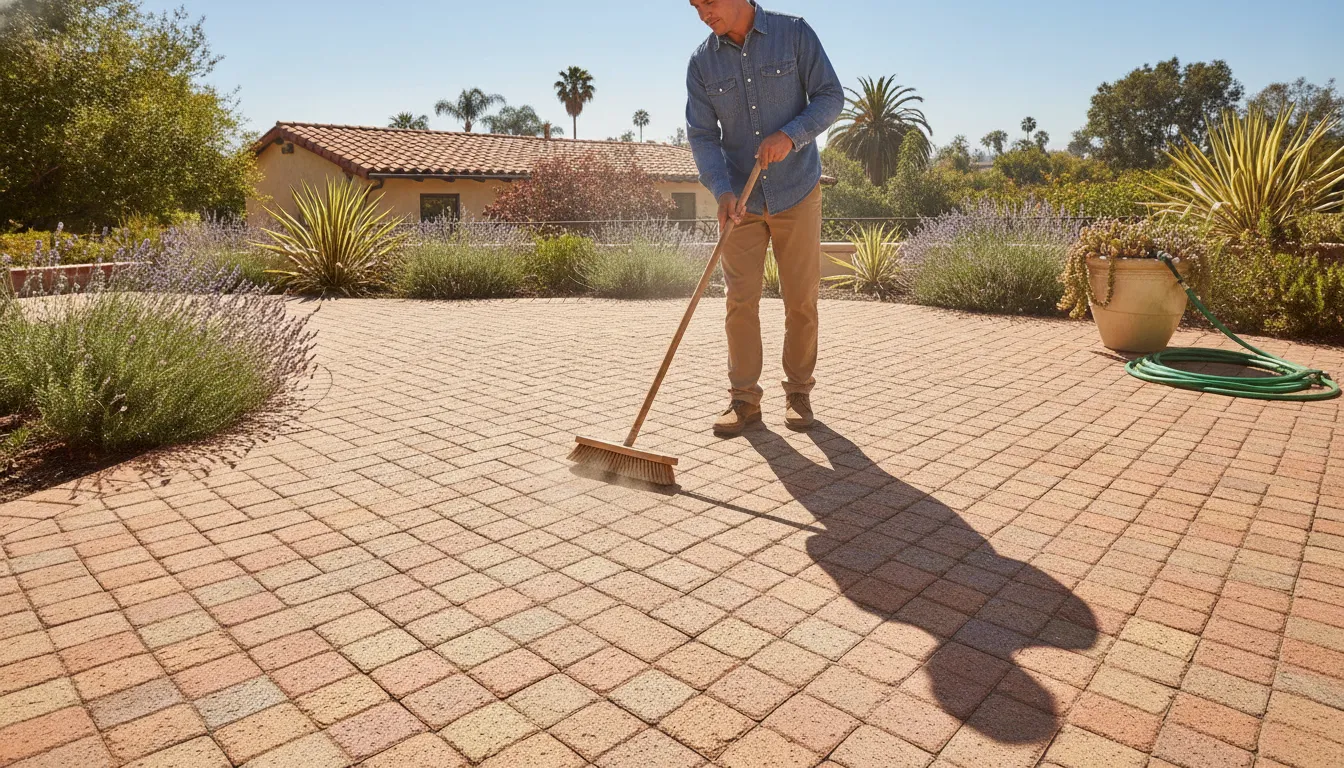
Southern California patios benefit from long periods of outdoor use, but the climate is not identical everywhere. Inland areas may see dust, heat, and dry wind, while coastal neighborhoods can experience damp air and moss or mildew in shaded locations. A simple maintenance routine keeps the surface attractive and makes small issues easier to correct before they affect the base.
- Sweep away grit and organic debris.
Use a stiff outdoor broom to remove leaves, soil, sand, and food debris every few weeks, and sweep more often beneath trees or around outdoor dining areas. Pay attention to the joints, where accumulated debris can hold moisture and encourage weeds. Avoid using a pressure washer as a routine cleaning method. Excessive pressure can displace joint material or damage the surface, especially when the nozzle is held too close.
- Refresh joint sand when gaps appear.
Inspect the joints after heavy rain, cleaning, or periods of foot traffic. If sand has washed or brushed out, clear loose debris and add compatible joint sand according to the installation system. Filled joints help stabilize individual pavers and reduce room for weeds to take hold. If several areas are repeatedly losing sand, have the drainage and edge restraints checked instead of simply adding more material.
- Clean moss and mildew in coastal or shaded areas.
Damp coastal air, shade, and slow-drying furniture or planters can create conditions for green growth. Remove the growth with a suitable paver-safe cleaner and a soft or medium brush, then rinse carefully. Test any cleaning product in an inconspicuous area first, and do not mix chemicals. Improve airflow by trimming back dense plants and move containers periodically so the surface can dry.
- Manage weeds and pests without disturbing the base.
Pull young weeds while their roots are shallow, or use a treatment specifically labeled as safe for the paving material and surrounding landscape. Avoid digging aggressively between pavers, since that can loosen the bedding layer. Keep soil, mulch, and irrigation overspray from collecting along the edges. Ants or other pests that repeatedly tunnel through joints may point to a larger problem that deserves professional inspection.
- Seal the patio when the system calls for it.
Sealing is not automatically required every year. The right timing depends on the paver material, existing finish, exposure, and joint condition. Clean and dry the surface first, repair unstable areas, and use a compatible breathable product. A sealer can support stain resistance and color retention, but applying it over dampness, residue, or active weeds can lock in problems and create an uneven appearance.
Permeable or porous paver arrangements can allow rainwater to infiltrate the soil, reducing runoff and supporting nearby landscape irrigation. That makes drainage part of maintenance, not just installation. Watch for standing water, washed-out joints, or areas that remain damp long after the rest of the patio dries. For homeowners choosing between pavers and concrete, the surface and water-management details are important factors to discuss before construction.
With the right base, consistent joint care, and climate-appropriate cleaning, a brick paver patio can remain a comfortable and welcoming part of a Southern California home for years.
How Long Do Brick Patio Pavers Last and Are They Worth It?
Brick patio pavers can last for decades when they are installed over a properly prepared base and maintained as needed. Their long service life, repairability, and timeless appearance make them a durable choice for a Southern California patio. They also create a practical outdoor living area that can support dining, entertaining, and everyday family use.
Unlike a surface that depends on one continuous slab, a paver patio is made from individual units supported by compacted base material and jointing sand. That layered construction helps the patio handle normal ground movement without turning one small problem into a large visible failure. The exact lifespan depends on the brick product, soil conditions, drainage, installation quality. And how the patio is used, but careful planning matters more than a short-term material decision.
How do brick pavers handle Southern California heat and movement?
Southern California patios face intense sunlight, hot summer surfaces, dry conditions, and occasional heavy rain. Brick pavers are well suited to this setting because the units can accommodate minor movement between one another. With the right base preparation and drainage plan, the patio is less dependent on a single rigid surface remaining perfectly intact through every seasonal change.
That does not mean a paver patio is maintenance-free. Water that collects beneath the surface, poorly compacted soil, or inadequate edge restraint can create settling and shifting. A qualified installer should evaluate the site before construction, direct water away from vulnerable areas, and build a stable foundation for the chosen pattern. Permeable layouts or intentional gaps may also allow water to move into the soil rather than concentrating runoff in one area.
What happens when one paver becomes damaged?
One of the most practical advantages of brick pavers is localized repair. If a paver is cracked, stained, or displaced, it can often be removed and replaced without demolishing the entire patio. A contractor can lift the affected unit, correct the bedding or base issue if needed, reset the paver, and replenish the joint material. Keeping a few spare pavers from the original installation can make future repairs easier, especially when the patio uses a blended color or a distinctive pattern.
Regular sweeping, prompt attention to weeds or settlement, and periodic joint maintenance help preserve the surface. Good drainage is equally important. A patio that sheds water correctly is more likely to retain its shape and finish over time than one where moisture repeatedly remains in the base.
Are brick pavers a better long-term value than poured concrete?
Poured concrete offers a clean, continuous surface, but cracking can become a larger visual and functional concern when movement occurs. Repairs may be more noticeable because the affected area is part of one slab, and matching an older finish can be difficult. Pavers provide more flexibility for spot repairs, future adjustments, and design changes.
The right choice depends on the site, the look you want, and how you plan to use the space. Consider the complete value over time, including preparation, drainage, maintenance, repair options, and how well the patio supports your outdoor lifestyle. For help evaluating the installation approach, see our guide to hiring a professional paver patio installer. A well-built patio should not only look good on completion day. It should continue performing as your home and outdoor routines change.
Why Hire a Professional for Your Brick Paver Patio?
Hiring a professional helps your brick patio pavers perform as well as they look. An experienced design-build contractor plans the base, drainage, layout, permits, and finishing details as one system, reducing the risk of settling, standing water, uneven joints, and premature repairs.
A patio is more than a surface placed over soil. It needs to support furniture, foot traffic, changing moisture conditions, and the everyday movement between your home and yard. Professional installation brings the site planning and construction discipline needed to make those details work together.
- Proper base preparation:
The installer excavates to the appropriate depth, evaluates the soil, and builds a compacted aggregate base suited to the site. A stable foundation helps limit shifting and low spots.
- Effective drainage:
Patio grade should move water away from the home without sending runoff toward another problem area. A professional can plan slopes, edge restraints, joint materials, and, where appropriate, permeable options that allow water to infiltrate the ground.
- Pattern precision:
Herringbone, running bond, basket weave, and custom borders each require accurate layout. Consistent lines, properly cut edges, and clean transitions around steps or walls make the finished patio appear intentional rather than improvised.
- Southern California permitting:
Hardscape projects may involve local requirements related to setbacks, grading, drainage, structures, or neighborhood rules. A contractor familiar with Greater Los Angeles and surrounding communities can identify permitting needs before construction begins and coordinate the design accordingly.
- Long-term warranty support:
A written workmanship warranty gives you a clear point of contact if an installation-related issue appears. Ask what the warranty covers, how long it lasts, and which maintenance responsibilities remain with the homeowner.
These steps matter especially when an existing yard has compacted soil, a slight slope, drainage near the foundation, or several elevations to connect. A professional team can address those conditions during planning instead of concealing them beneath the pavers. That approach also makes it easier to coordinate seating areas, walkways, planting beds, outdoor kitchens, and other parts of a larger backyard renovation.
LevelWorks is a licensed, bonded, and insured design-build contractor serving Greater Los Angeles and parts of Orange County. With more than 10 years of Southern California experience, the team can manage patio design, permitting, and installation from start to finish while keeping communication clear. The goal is practical craftsmanship with a design that feels at home in your property, consistent with the promise of Building Homes, Building Dreams.
Before choosing an installer, review questions about scope, drainage, materials, schedule, permits, and warranty coverage. Our guide to hiring a professional paver patio installer can help you prepare for that conversation. When you are ready to discuss your property, request a project consultation or call (855) 202-2015.
Request your brick patio paver quote or call (855) 202-2015 to discuss your project with our licensed, bonded, and insured team.
Frequently Asked Questions
What is cheaper, brick or pavers?
Neither option is always less expensive because the total depends on material selection, patio size, site access, demolition, base preparation, drainage, edging, and installation details. A project quote should compare the complete installed systems rather than only the surface material. The right choice balances appearance, performance, maintenance, and the long-term plan for the space.
What goes underneath brick pavers?
A properly built patio typically includes a compacted subgrade, a load-bearing aggregate base, a leveling layer, the pavers, and joint material. The required depth varies with soil, drainage, expected use, and local conditions. Careful excavation and compaction help limit settling, while edge restraints keep the pattern stable over time.
Are brick patio pavers durable?
Yes, brick patio pavers can provide a durable outdoor surface when the base, drainage, joints, and edges are installed correctly. Individual units can also be removed and replaced if a localized area is damaged or needs access. Durability still depends on choosing suitable materials and maintaining the surface as conditions change.
How do you maintain a brick patio?
Sweep regularly to remove grit and leaves, clean spills promptly, and check joints and edges for movement or weeds. Replace displaced joint material when needed, and use cleaning or sealing methods appropriate for the specific paver. In Southern California, periodic inspection after heavy rain and attention to drainage can help protect the patio.
Can I install brick patio pavers myself?
A small, straightforward project may be manageable for an experienced DIY homeowner, but patios require accurate grading, substantial excavation, thorough compaction, and precise pattern layout. Sloped sites, drainage concerns, large areas, and permitting questions add complexity. A professional design-build team can coordinate planning and installation from start to finish.
Ready to Plan Your Brick Patio Pavers?
A thoughtful patio plan can bring together the pattern, color, drainage, and maintenance details that fit your Southern California home. Request a consultation for your brick patio paver project through our project consultation form, or call LevelWorks at (855) 202-2015 to discuss your goals. Our licensed, bonded, and insured team brings more than 10 years of experience to paver and hardscape projects, helping you move from ideas to a practical outdoor space.